

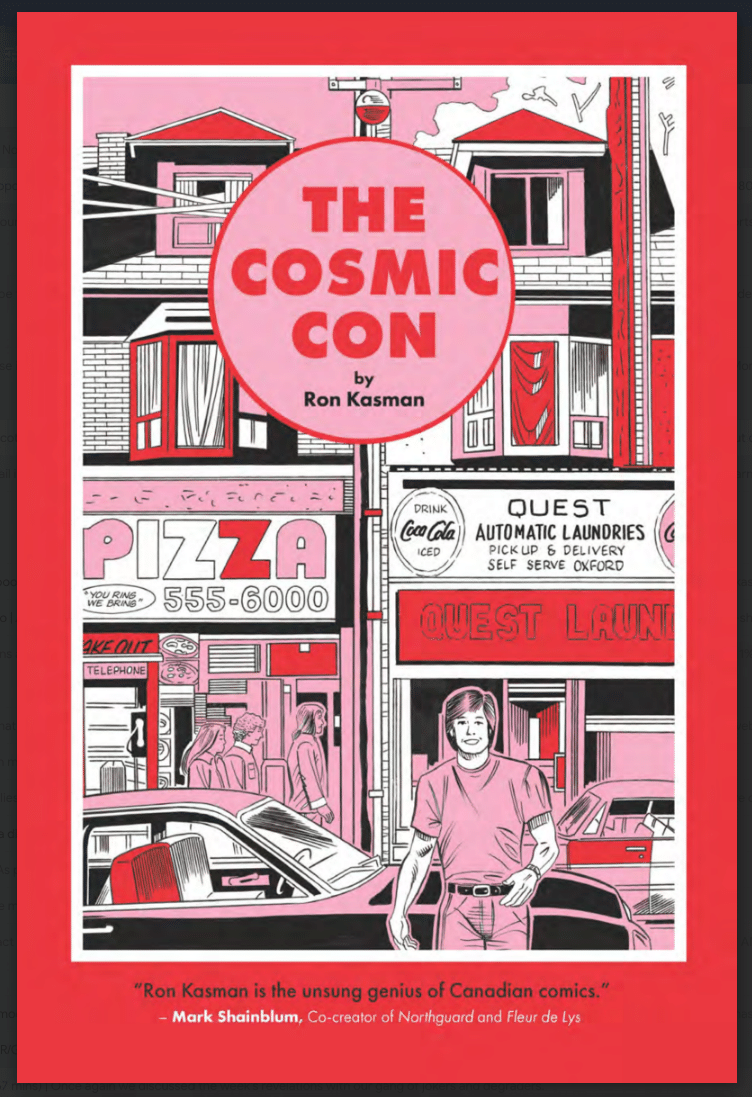
My name is Ron Kasman. It is likely that you don’t recognize the name unless you read an earlier blog a few years back.
I am a writer and artist of graphic novels, the term used to describe the very long comic books that have gained popularity in recent years. I have had four published and I am working on a fifth, each about 200 pages long.
These books are about subjects important to me. I expect that the zeal I have for a topic will pour off the page so forcefully that the readers will join me in my fervor. Reviews indicate this approach seems to have worked so far. Yeah, the old guys who grew up reading Spider-Man and Superman liked my Tower of the Comic Book Freaks. I expected that. But female reviewers, half my age, who had never before read a comic book, liked it too.
I outlined in my earlier article how Blake Snyder’s Save the Cat! walked me through every phase of writing my graphic novel. Save the Cat! is literally next to my computer when I write.
Before that, I had some idea of structure from personal observation and from reading other books on comics and film, but none of those came near Save the Cat! for building a framework on which to hang my ideas. When my first graphic novel was finished, I had something to be proud of. Without Save the Cat! I still would have had something, but it would have been uneven, confusing in places, and probably unpublishable by a reputable company.
I had written and had published a dozen or so comic books before Snyder’s book, but they were always shorter stories where structure is important but less complex. Over a six-page comic book story, I could fake it by remembering back to high school creative writing class and by the intuitive analysis of the stories I like best. But once I added a few more pages, I found myself needing a more formal analysis of structure to stop the story from collapsing on itself.
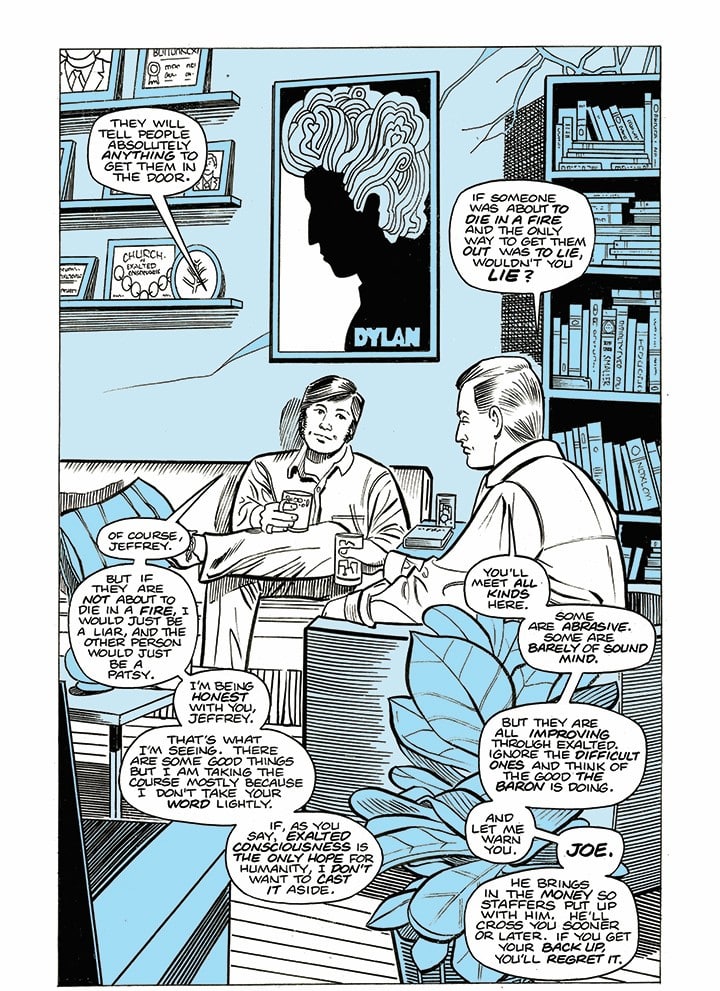
For my recently published graphic novel, The Cosmic Con, my writing process began by quickly summarizing the story. No one saw this stage but me. It was done just to put to paper the ideas buzzing in my head, that is all.
Also, I brainstormed close to 20 titles for the book, trying to live up to Blake Snyder’s ideas of what makes a good title. I ran them by a friend and together we threw away most of them leaving three. I sent them to the publisher: “The Cosmic Con,” “Gods Before Me,” and “Beyond Belief.” My favorite was “Gods Before Me.” The publisher eventually chose The Cosmic Con.
I then turned my story summary into a document that consisted mostly of a short story, 62 single-spaced pages long. There is a section at the beginning where I wrote down the names of each character and each setting, along with a single line descriptions of each. The next section, preceding the body of the short story, consists of the headings taken from Save the Cat!: 1. Opening Image. 2. Theme Stated. 3. Set-Up 4. Catalyst. 5. Debate. 6. Break into Two. 7. B Story. 8. Fun and Games. 9. Midpoint. 10. Bad Guys Close In. 11. All Is lost. 12. Dark Soul of the Night. 13. Break into Three. 14. Finale. 15. Closing Image. There is a sentence or two after each heading describing what I had hoped to put into those chapters.
Throughout the creation of the short story, I constantly referred to Save the Cat! My story had elements of Monster in the House, Buddy Love, and Fool Triumphant. As time went on, it clearly became a Monster in the House Story, which I wrote using the guidelines that Blake Snyder presented. That solved most of my problems, but the short story did not just roll off the word processor.
I discovered that I think best while walking my dog or while driving long distances on an open highway. These activities allow me to focus with little distraction. Initially, I didn’t label my chapters numerically or with clever titles. That came much later in the process. At this stage the chapters were called Opening Image, Theme Stated, and so forth.
Next, I used this short story to draw breakdowns which a filmmaker would call storyboards. This process further solidifies the story but also makes me aware of problems within it. Each page of breakdowns, about 200 in all, represents a page of art that was to be completed over the next two years or so.
I turned the short story into a script coordinating closer with the breakdowns. I noted dialogue, sound effects, narration, and thoughts—all of which would eventually be hand lettered on the artwork. And, inevitably, I came up with some words that were better than the words I had used earlier.
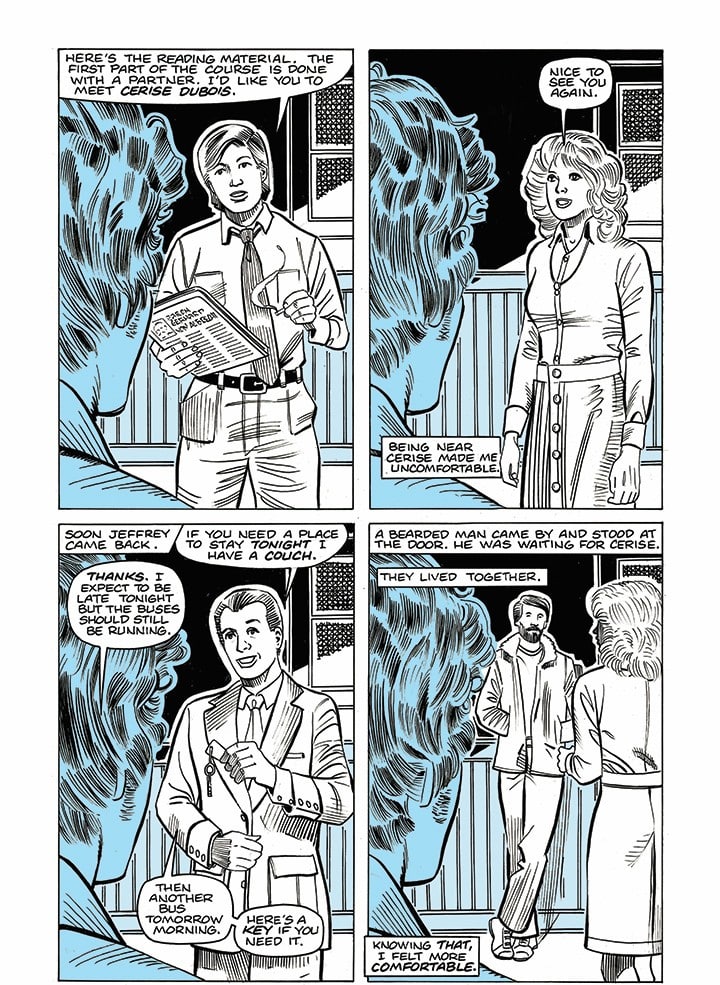
Then, and this is the longest part of the process, I drew in pencil, lettered by hand and inked with brush and pen. When I draw, I am the director, the casting agent, the clothing designer, the lighting staff, the special effects expert, the builder of locations, and the cameraman. I prepared the black and white images for publication using a computer. Then, I colored those images with photoshop. I continued changing the script right up to the last minute. It is no surprise to me that Federico Fellini, Frank Miller, and Tim Burton have also been accomplished cartoonists.
At a certain point, I needed another pair of eyes to go over what I had done. I chose my critics carefully. It is a rare person that can tell me when I am going off course and also suggest how to improve things. If you know someone who can do that, you have a treasure.
Blake Snyder said that a writer must be bullheaded. The Cosmic Con was rejected by about 60 publishers (and I rejected offers from three others) to find the one who wanted it and would do it justice. No publisher is a perfect fit but some of them are good fits. Everyone with an idea, good or bad, seems to be writing a book. Similarly, everyone with the address of a printer, a Facebook site, and an Amazon account seems to be a publisher.
But the missing element is the distributor. If your publisher’s distributor is Amazon, well, you can go to Amazon on your own while not having to split the profits and not having to share ownership of something that you, yourself, created. To write about crowdfunding would be an article, or several articles, all on its own.
And what if you don’t have the time to write a full-blown script for a 2-hour film or write and draw a 200-page graphic novel? Realize that at certain times in your life and maybe through your entire life, there will be things more important than that. Spare time is a luxury. I had to choose between spending two years creating a graphic novel and all the other things I could have done. I realize that they are not always mutually exclusive, but when the decision for me has been between a chance at a film/comic book credit and feeding, clothing, and housing a family… it has been an easy decision to make.
If you can’t write a full blown film script, there are middle solutions. How about a TV show pilot or a short documentary? How about writing a play during the long ride into the city on the train each day? Could you write an arthouse film or a film to be shown in a repertory theatre? A YouTube video? A news item for television? How about a writing short film that could be shot completely with an iPhone?
I wish I was a big time operator in all this but, plainly, I am not. Only one of my graphic novels has been shopped around for filming. And it was not optioned. Optioning the book for film would have been a thrill and could have been a financial triumph. The chances are that an option would have made me more money than book royalties.

But it is not as though I have done this without success either. Most recently my upcoming book made the Canadian Broadcasting Corporation list of “Graphic Novels to Read in the Autumn.” I have been nominated as the Best Cartoonist in Canada. My original art was in a one-man show in a major gallery, and the then mayor of Toronto attended the opening. My art is in the National Archives and the collection of the King of England. The Lieutenant Governor of Upper Canada (the British Monarch’s emissary to Ontario) used one of my books in his Crusade for Literacy.
I could go on, but all of this barely makes me a rumor in my own land. However, it is more than enough to make my children proud of me and that’s enough to make me want to do try it all again.
I’ll end with a Rodney Dangerfield joke. I just finished my fourth book. Tomorrow I’m gonna start reading another one.