
Home › Success Stories › How I Accidentally Wrote Another Plotting Guide While Writing My First Mystery
How I Accidentally Wrote Another Plotting Guide While Writing My First Mystery

Jessica Brody
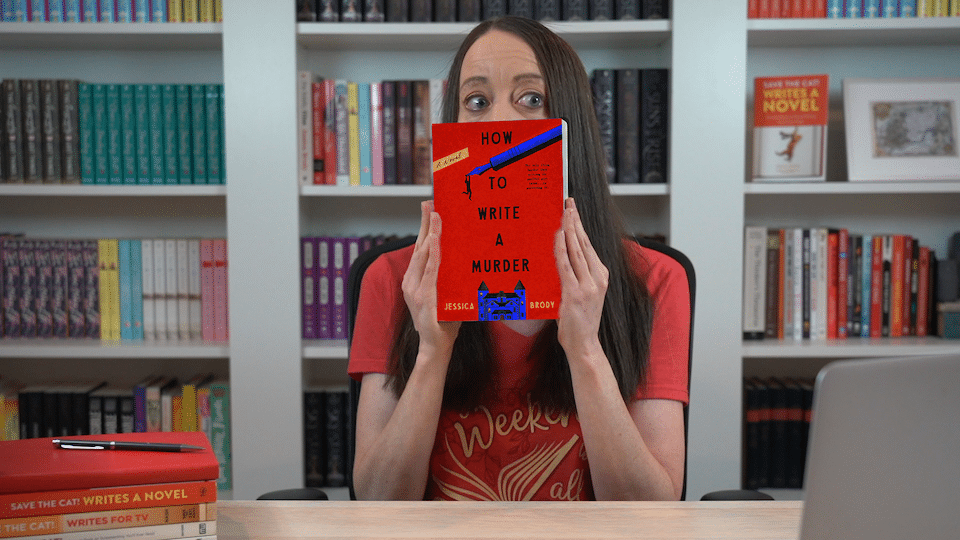
When I set out to write my first-ever murder mystery—about a group of mystery writers who get trapped at a mystery-writing conference and people start turning up dead—I felt an enormous amount of pressure.
Mysteries are one of the most tightly plotted genres out there (at least the good ones are). And as the author of a bestselling book on plot (Save the Cat!® Writes a Novel), the stakes definitely felt raised.
What if my Midpoint is weak? What if my Catalyst is late? What if someone finds a plot hole?!
To help ease my fears, I studied countless murder mysteries to see how the beats were flavored in a Whydunit. And, in doing so, I started to give the beats new mystery-flavored names for myself—as a kind of mental cheat sheet.
For instance, I noticed that most of a mystery’s misdirection happens in the Fun and Games, so I dubbed it the “Maze of Misdirection.” The Break into 2 is usually where the detective (professional, amateur, or otherwise) is called in to solve the murder, so I nicknamed it “Summoning the Sleuth.”
At the time, I didn’t realize what was happening. I was just trying to teach myself how to write a murder. It wasn’t until the third draft that I realized what had happened:
I had accidentally written a mystery-themed version of Save the Cat!
And that’s when a light bulb went off.
What if I used these mystery-themed beats not just to teach myself how to write a murder, but to teach the reader how to write a murder too—as one is unfolding on the page?
What if I wove a fictional plotting guide into the story? But not just as a clever plot device—as an integral part of the mystery itself?
What if the plotting guide is the murder weapon?
And the killer is following all the steps to try to get away with murder?
It felt like the premise I was destined to write my whole life. So I leaned in hard.
From a flawed hero who’s obsessed with the rules of story structure, to a Theme Stated that all but announces itself, to a cat that’s literally saved on page 18, this book feels like the Act 3 synthesis of everything I’ve learned in the past 15 years of teaching Save the Cat!
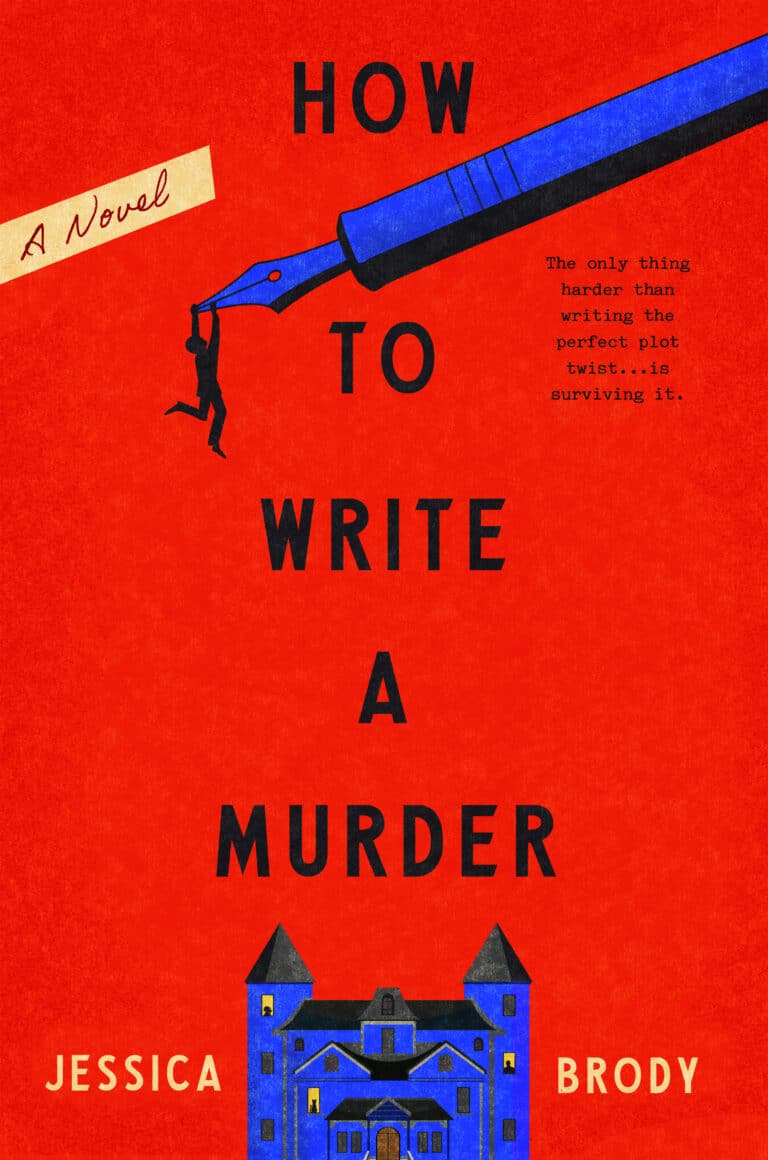
How to Write a Murder became my love letter to the method that taught me how to plot—and to all the writers I’ve had the privilege of teaching through my books, webinars, and courses.
The book releases from Penguin Random House on September 22 and I cannot wait for you to read it.
Am I still afraid that you’ll find a plot hole? Or poke at my structure to see if it holds? Or judge me for the fact that the Catalyst comes slightly after the 10% mark?
Of course. I’m a writer. Fear comes with the territory.
But I also know that you, my dear Save the Cat! fans, are the only people in the world who will truly understand this book. Only you will catch the Easter eggs and the inside jokes. Only you will see the deeper layers about storytelling that I hid behind what is hopefully an entertaining and puzzle-filled read.
In a way, I wrote this book for you.
Because how do you write a murder mystery when you’ve literally written the book on plot?
You hide the book on plot inside the murder mystery.
Share this article:






Similar Articles




Subscribe to Save the Cat! Newsletter