
Home › Tips and Tactics › Want Your Horror Story to Stand Out? Show Us Your Inner Madman.
Want Your Horror Story to Stand Out? Show Us Your Inner Madman.

Jamie Nash
You’ve written a horror story. Great concept. Strong characters. Your beats are doing exactly what good little beats should do.
It’s probably not enough.
Your perfectly well-behaved horror story isn’t going to jump out of the pile in 2026.
How do you stand out?
You need to get a little wild. Unleash your inner Michael Myers, Freddy Krueger, Art the Clown.
In the words of Norman Bates, “We all go a little mad sometimes.”
If you’re a new writer, “That was nice” is a terrifying review. Aim for “WHAT IS WRONG WITH YOU?” followed immediately by “Do you have anything else we can read?”
Boldness matters in almost every genre. But in horror? We’re trying to make grown adults sleep with the lights on. We want our audiences to feel they’ve made a terrible mistake just opening this book, buying a ticket, or pressing play.
Enter the “In the Hands of a Madman” moment. It’s the moment that makes the reader or audience think: Oh. This storyteller will actually GO THERE.
Ideally, it happens early. Just when we’re getting comfortable. Before we decide we know the rules and start mentally assigning survival odds to characters.
We bring all kinds of invisible safety rails into stories. The kid will probably survive. The apparent protagonist must be sticking around. Someone will interrupt before things get too awful. The rescue will work. Surely the storyteller won’t make us experience that.
Your madman moment kicks out one of those rails.
Sometimes it crosses a taboo: a kid dies horribly, the camera sticks around for the part we were certain it would spare us, a loving family sits down to dinner—and the family dog is on the menu.
Sometimes it takes our storytelling expectations and feeds them into a wood chipper. We’ve barely finished the Set-Up when the person we assumed was our hero gets butchered. An All Is Lost–level catastrophe arrives in the middle of Act Two. Or the Midpoint gives our hero a whole new set of problems. Claws. Fangs. An appetite for the supporting cast.
The standard Save the Cat! beats can still work beautifully underneath. But the audience should be too busy yelling “YOU CAN’T DO THAT!” to admire your structure.
You don’t have to cross every boundary. Cross one the audience was counting on. They’ll start questioning the others.
Spoilers ahead. You’ve been warned. (Which, in horror, traditionally helps no one.)
Take Barbarian. We spend its opening trying to figure out whether Keith, the stranger sharing Tess’s rental, is dangerous. Then the Mother appears and brutally kills him. Before we can recover, the movie cuts away to Justin Long driving along in sunny California.
Uh… excuse me. There is a woman in that basement. Our hero! We had a whole situation going.
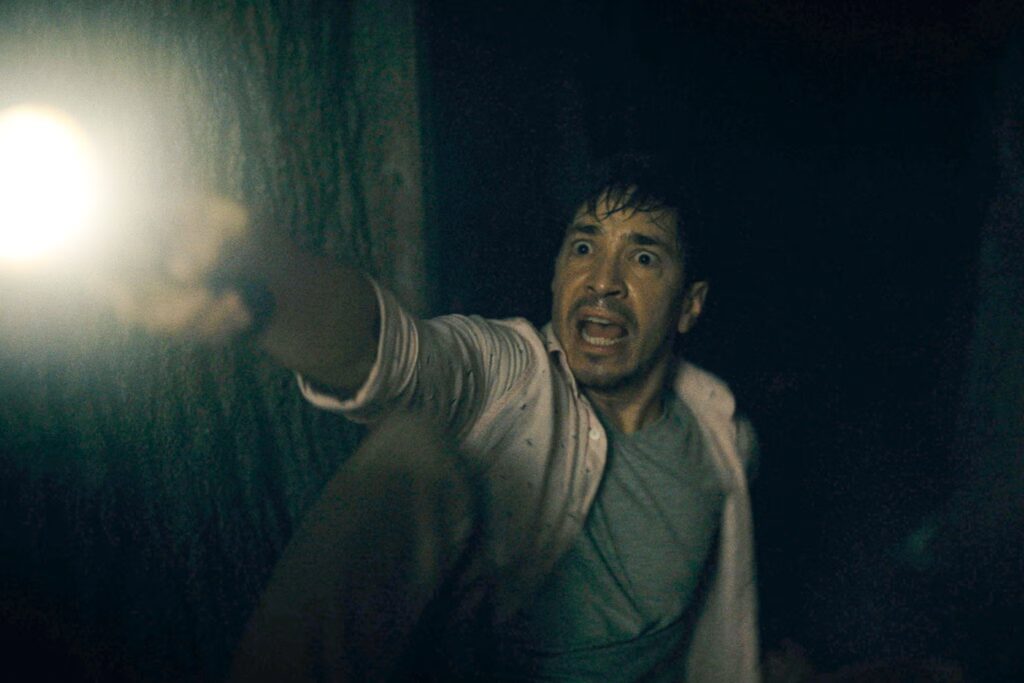
The monster’s reveal is shocking, but the storytelling is what really pulls the rug out. The movie demolishes our theory about Keith, leaves Tess in danger, and practically changes the channel on us. Now we don’t trust our ability to predict the next scene, let alone the ending.
Then there’s Hereditary. Charlie is having a severe allergic reaction. Her brother Peter races toward the hospital. She sticks her head out the car window, desperate for air.
We understand this scene. A frantic drive. A medical emergency. Can he get his little sister help in time?
Then comes the telephone pole.
Ouch.
And as if that isn’t enough, the movie doesn’t let us escape the aftermath. Peter drives home, leaves his sister’s body in the car, and goes to bed. We’re left waiting for their mother to discover what happened. The story makes us wait…
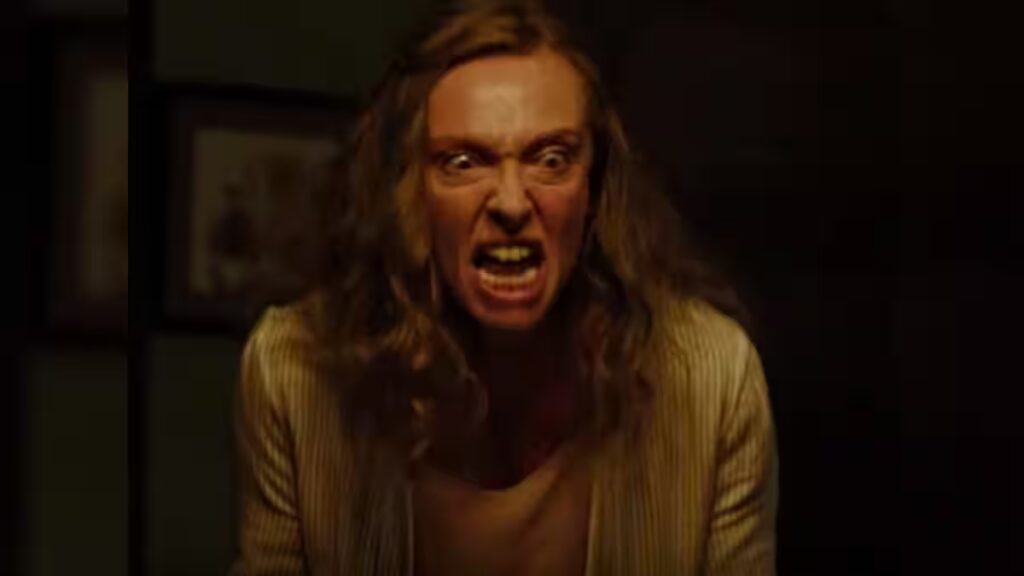
The impact is horrifying. What follows tells us just how merciless this storyteller is willing to be. Good luck relaxing for the rest of this family’s adventures.
Obsession crosses a different kind of line.
Bear makes a wish for Nikki to love him. And it works! Unfortunately, “works” is doing some deeply upsetting work in that sentence.
As her behavior becomes more unhinged, Bear realizes this isn’t freely given affection. The wish is controlling her. Somewhere inside this nightmare is a person whose choices he has taken away.
Okay. Horrible mistake. Time for our hero to do the right thing.
Instead, he continues the relationship. They have sex.
Oh. We’re going THERE.
The storyteller crosses a moral boundary we expected our protagonist to respect—and leaves us following him on the other side.
Horror television needs madness, too. A well-placed moment toward the end of your pilot can make viewers question your judgment while immediately clicking “Next Episode.”
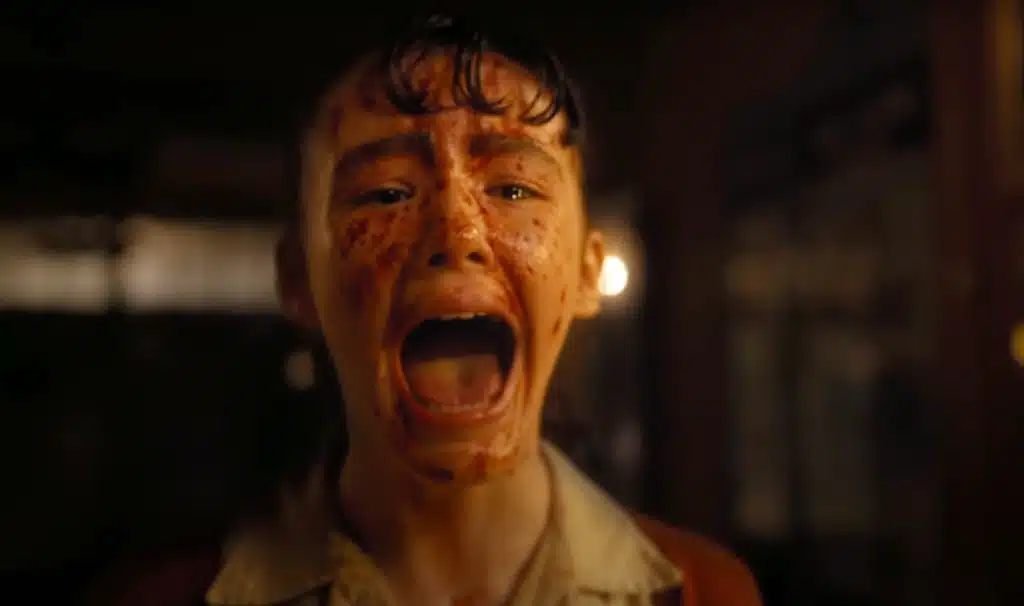
IT: Welcome to Derry introduces a group of kids who look like they could become our new Losers’ Club. We get to know them. Start investing in them. Then the pilot’s theater attack kills three of them.
Wait. Weren’t those our people?
We were making season-long plans!
The show exploits something we barely realize we believe: characters who receive that much set-up are supposed to stick around. When that protection disappears, everybody else is vulnerable.
For a completely different flavor of insanity—and a wildly questionable interpretation of “Save the Cat!”—the Brand New Cherry Flavor pilot has our hero, aspiring filmmaker Lisa Nova, vomit up a kitten.
Yep. A kitten.
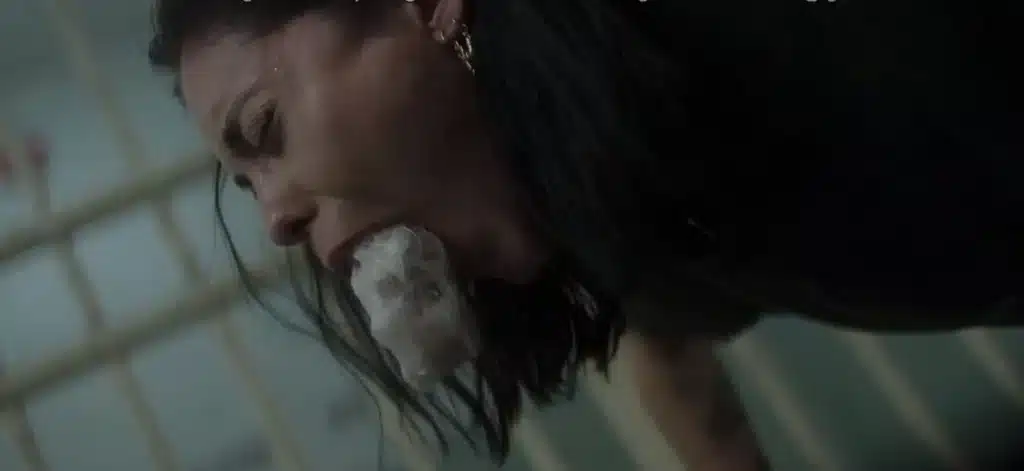
It’s madman stuff.
And once you’ve coughed up a kitten, even a hiccup gets suspenseful.
A great madman moment makes the scenes AFTER it scarier. The audience starts doing some of the work for you. A quiet conversation feels less safe. Every shadow holds more sinister possibilities. We stop assuming you’ll pull back at the last second.
Hello, dread.
For a modern horror story trying to stand out, I’d treat this beat as required. Its placement is flexible.
Somewhere in the first half, let your inner madman make an entrance.
And make that entrance belong to your story. Your monster. Your characters. A random atrocity might get a reaction, but you want a moment that keeps us squirming all the way to the end.
To find yours, start with the little assurances your audience is clinging to:
What do they assume I won’t do?
Where do I make them reconsider?
Why will everything that follows feel scarier because of it?
Give us a moment we’ll remember when we’re telling somebody else about your story. The moment that makes us lean forward, turn the page, and wonder who on earth came up with this.
Then make us nervous about what you’ve got planned next.
So be a madman! But only on the page. Be lovely in meetings and Zooms and stuff.
Happy nightmares.
Share this article:





Similar Articles





Subscribe to Save the Cat! Newsletter