

 The Brutalist Beat Sheet Analysis
Why We Chose to Do a Save a Cat! Beat Sheet Analysis of The Brutalist
To this date, The Brutalist has garnered 344 nominations and 124 wins!
The film has been nominated for 10 Oscars®, including Best Motion Picture of the Year, Best Achievement in Directing (Brady Corbet), and Best Original Screenplay (Brady Corbet and Mona Fastvold).
The Brutalist is also one of the 10 Movies of the Year from the American Film Institute.
The Brutalist
Written by: Brady Corbet and Mona Fastvold
Directed by: Brady Corbet
Genre: Superhero – Real Life Superhero/Golden Fleece

The 3 elements of a SUPERHERO story are:
1) The hero of your tale must have a special power—even if it’s just a mission to be great or do good.
2) The hero must be opposed by a nemesis of equal or greater force, who is the “self-made” version of the hero.
3) There must be a curse for the hero that they either surmount or succumb to as the price for who they are.

The 3 elements of a GOLDEN FLEECE story are:
1) A road spanning oceans, time—or across the street—so long as it demarcates growth. It often includes a “Road Apple” that stops the trip cold.
2) A team or a buddy the hero needs to be guided along the way. Usually, it’s those who represent the things the hero doesn’t have: skill, experience, or attitude.
3) A prize that’s sought and is something primal: going home, securing a treasure, or re-gaining a birthright.
Note: At 3 hours 35 minutes, The Brutalist supersizes its beats—but they’re all there (and some even have their own title cards)!
Opening Image
“Overture” appears on the screen, kindly letting us know that this is our Opening Image/Sequence.
A young girl, Zsófia (Raffey Cassidy), in concentration camp garb, trembles at the questions of Hungarian and Russian soldiers, while her uncle, Hungarian-Jewish survivor of the Holocaust, László Tóth (Adrien Brody), fights his way through a dark and churning hellscape.
We hear the voice of his wife Erzsébet (Felicity Jones) as she composes a letter assuring László that she is still alive and someday will reunite with him in America. László finally emerges into sunlight and we realize he has been in the bowels of a ship; the Statue of Liberty looms above him, but from László’s visual perspective, it is upside down. This searing image will stay with us and underscore the theme of The Brutalist.

Set-Up
Title Card: “The Enigma of Arrival”
In László’s brand-new thesis world, he is joyous at having surviving the Buchenwald concentration camp and making it to Ellis Island, but carries the deep anguish of having been separated from his wife and niece and the assumption that they have perished in the camps. He takes a bus to Philadelphia, where he has been offered shelter by his cousin Attila (Alessandro Nivola) and his Catholic wife Audrey (Emma Laird). When Attila says he’s received a letter from Erzsébet and that she and Zsófia are still alive, László collapses in tears. After all he’s suffered, a new life of freedom and love await.
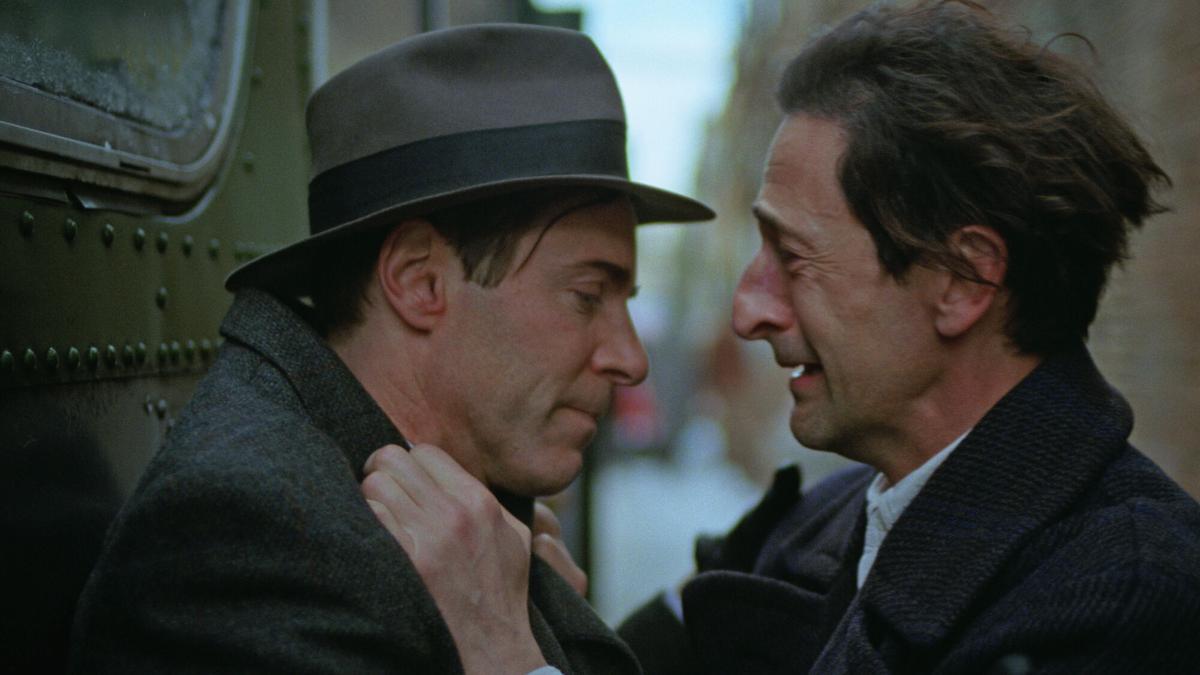
Or so he thinks. The warning signs that this long-awaited thesis world will not truly alter his stasis=death circumstances come quickly. There are too many things that need fixing, including László’s recent introduction to heroin, given to him on the ship for the pain of a broken nose from an escape attempt. László also discovers that Attila has not only converted to Catholicism but is calling his furniture store “Miller and Sons” because Americans “like a family business” (read: “don’t like doing business with Jews”). And Audrey is polite, but we sense that she is deeply uncomfortable with László’s foreignness; her first words are “we know someone who could fix that,” “that” being László’s nose.
But perhaps the most difficult thing for László to stomach is the prospect of his new profession. Underwhelmed by the store, László states bluntly that the furniture is “not very beautiful” and we discover that before the Third Reich took over, he was a well-known Bauhaus-trained architect who designed a library in Budapest. László’s pride in his work and his artistic genius will be distasteful to those who feel that he should be grateful for the scraps given him.
Theme Stated
In Erzsébet’s letter, she quotes Goethe: “None are more hopelessly enslaved than those who falsely believe themselves free.” László’s primal quest to free himself of internal and external imprisonment will hit road apples of antisemitism, anti-immigrant sentiment, addiction, and that soul-sucking marriage of art and commerce: patronage.
Catalyst
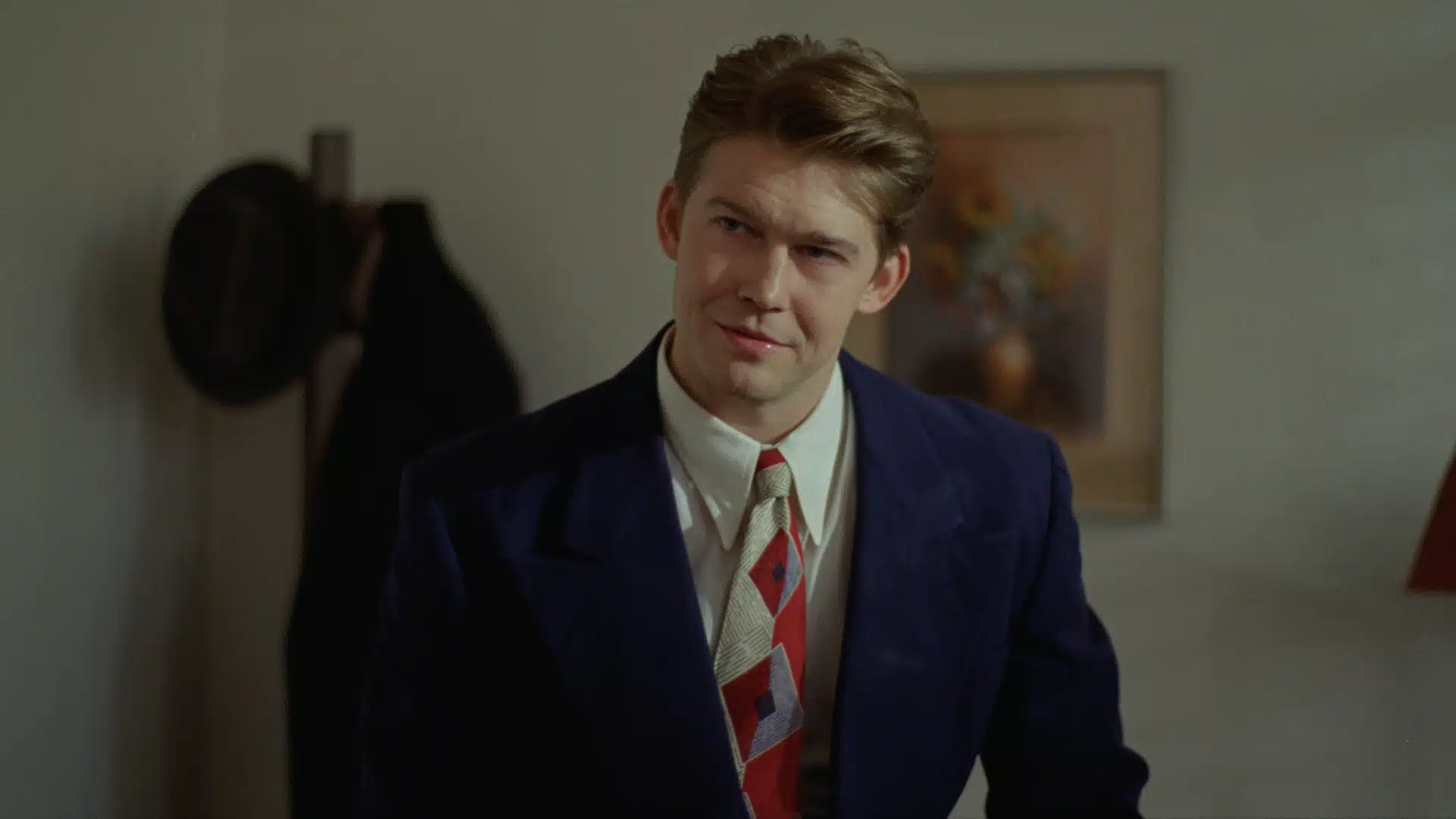
A new client, Harry Lee Van Buren (Joe Alwyn), hires László and Attila to surprise his wealthy father by remodeling his messy study into a proper library. László’s relationship with the Van Buren family will drive the action throughout the next 30-odd years.
Debate
Attila and László drive out to the Van Buren mansion, where László does not kowtow to the demands Harry makes, bluntly telling him that what he wants will cost twice as much as the initial offer. Harry immediately dislikes László but acquiesces. László guts the chaotic study and creates a stunning—and very modern—library, which makes him feel alive again.
Enter Harrison Lee Van Buren (Guy Pearce) in a whirlwind of rage after seeing one of László’s workmen, Gordon (Isaach de Bankolé), a “strange Negro roaming around the property.” He tears into László and Attila, furious about his study being changed without his permission. László calmly tries to explain, but Harrison throws them out, screaming obscenities.
When Harry refuses to pay for the renovation, Attila lashes out at László, blaming him for the situation and for making a pass at Audrey. László is stunned at this false accusation and bewildered and devastated when Attila throws him out.
Break into Two
Three years later, we find László waking up in a men’s shelter, still separated from Erzsébet. He is bearded, haggard—and a heroin addict.
Fun and Games
Enter Harrison Lee Van Buren again, this time all sunshine and magnanimous charm, taking László into a very unexpected antithesis world. Harrison holds a Look Magazine article that features him standing in the library László designed, with a caption about it being the realm of a “forward-thinking man.” He’s also brought pictures of buildings László designed in pre-war Germany, obvious forerunners of the emerging architectural style called “brutalism” (wink, wink, although the term is never spoken out loud in the film).
Harrison apologizes for his past behavior and finally pays for the work, inviting László to come to his home. A driver in a fancy car comes to pick him up and as László walks through the lavish home and feasts with Harrison’s wealthy friends, there is a wondrous sense that perhaps things will change for him.
Harrison introduces László to Michael Hoffman (Peter Polycarpou), a Jewish lawyer who thinks he may be able to help get Erzsébet and Zsófia out of Europe, which makes László nearly break down in tears.
It all seems rather magical, but after dinner Harrison tells László an odd story about his devotion to his mother that led Harrison to harshly withhold money from his grandparents. We sense a deep coldness about Harrison’s world view that should give us pause, but he follows it up with a grand surprise: he wants a huge community center, The Van Buren Institute, built on a hill behind his mansion and he wants László to design it.
Thus, Harrison becomes László’s benefactor, his patron, his biggest fan… and his nemesis; he’s the “self-made man” who worships power and László’s talent, in that order, and secretly despises László for possessing a gift he does not have.
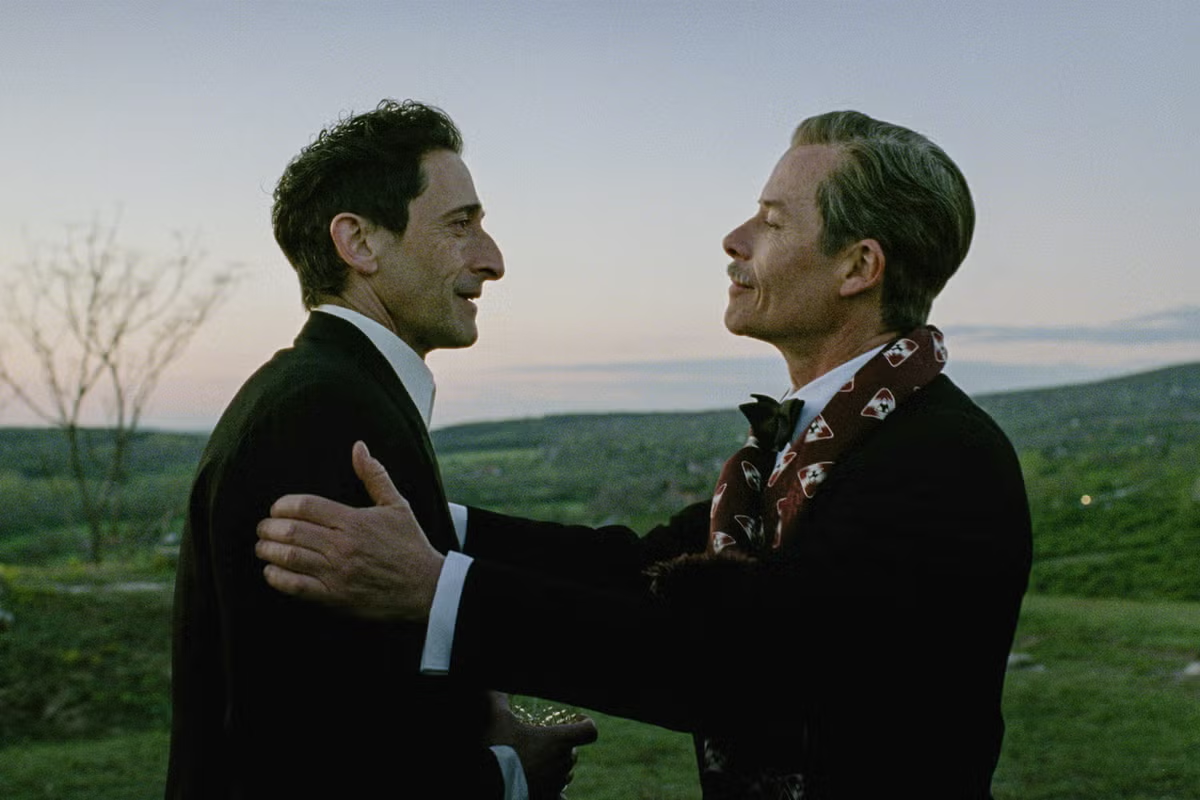
Overwhelmed at first, László draws on his architectural superpower and creates a model of the project that stuns and confuses Leslie (Jonathan Hyde), Harrison’s old-fashioned builder; what is this monstrosity, this raw, minimalist structure that is to be made not of marble, but of ugly concrete? László must convince Leslie, the mayor, and townspeople deeply suspicious of a foreigner, that his design is a “landmark that not only proclaims ‘I am new,’ but ‘I am part of the new whole’,” a sentiment that could be applied to László himself.
B Story
László’s relationship with his wife Erzsébet sustains him, even though we don’t meet her until after the Midpoint. She is the team that guides him with love, common sense, and fierce loyalty. Ultimately, she will be his savior.
Midpoint
Miracle of miracles (and a false victory), the building gets approved at the same time Erzsébet sends László a letter with the requested documents for her and Zsófia to emigrate to America. As we watch real-life footage of the post-war boom in American building, we hear her breathless hope, “does this mean we might meet again soon?”
And… Intermission! (And… we’d like to thank Corbet and Fastvold for a very clear Midpoint.)
Bad Guys Close in
Title Card: “The Hard Core of Beauty”
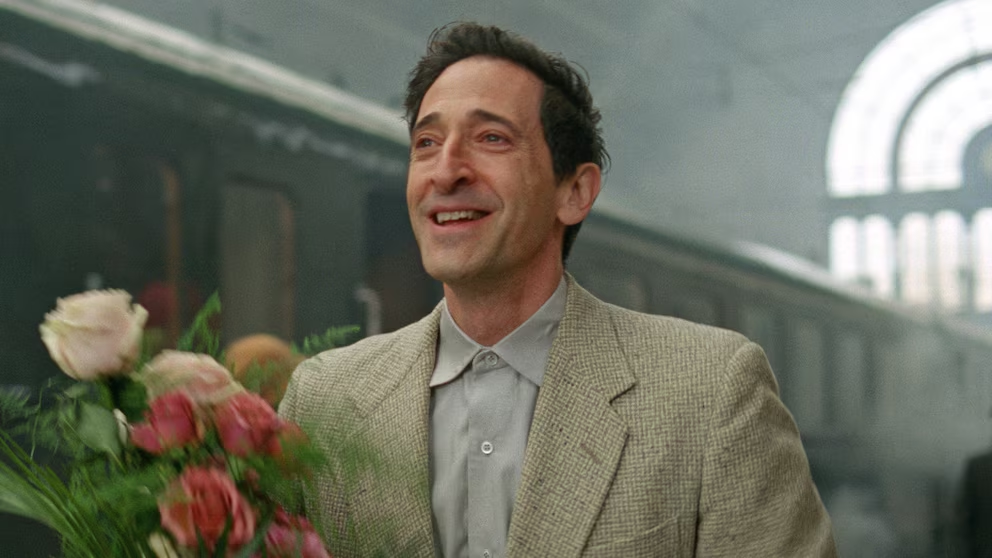
Indeed, the beautiful reunion that László anticipated is immediately colored with tragedy: his niece Zsófia has selective mutism from war trauma and Erzsébet is in a wheelchair, suffering from osteoporosis caused by famine.
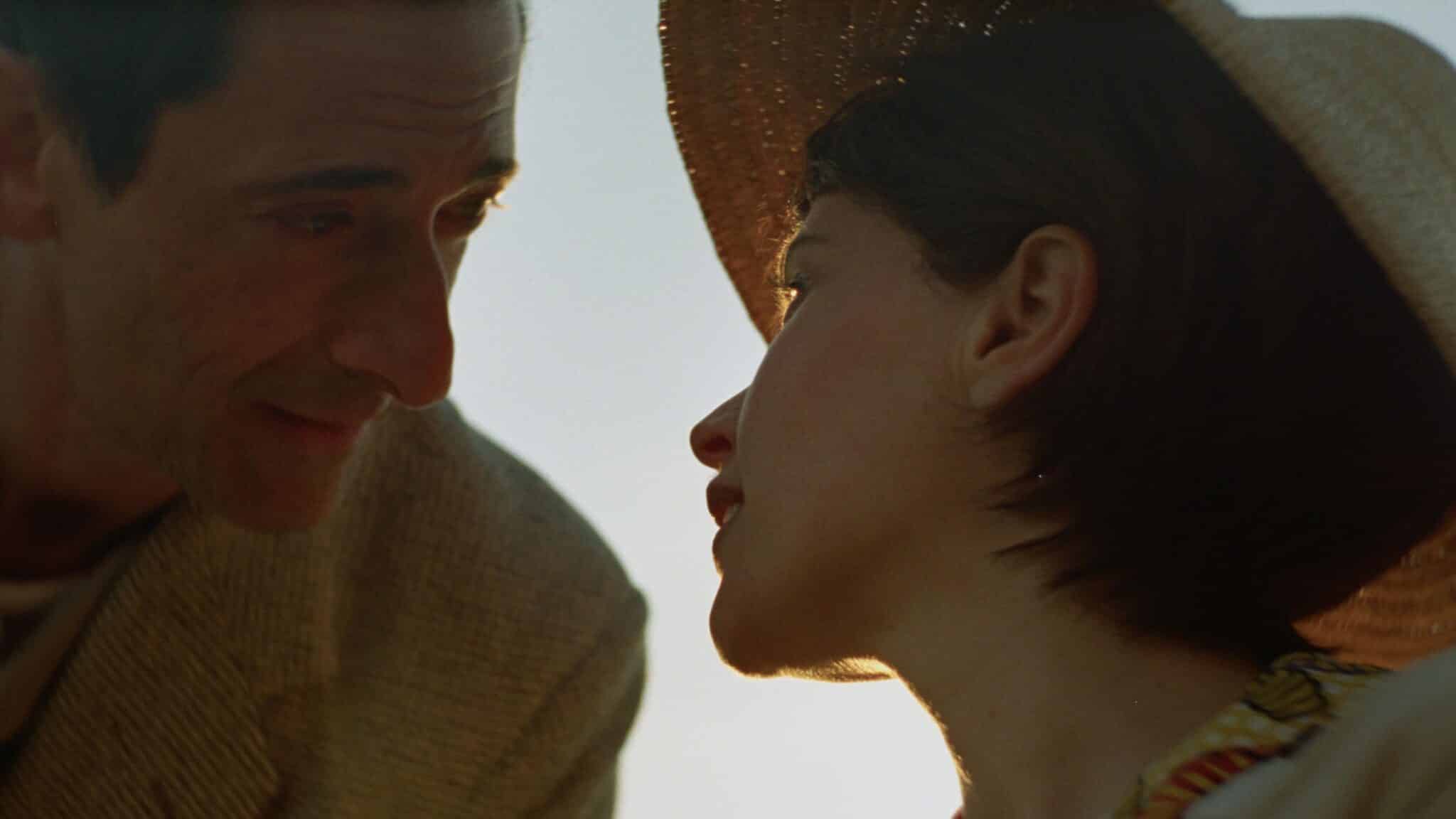
But she is still his beloved Erzsébet, an intelligent, perceptive woman who is immediately suspicious of Harrison and taken aback by how demeaning he is to László. She is able to verbally spar with Harrison in a way that László cannot afford to, subtly undercutting his comments about “beggars” in Penn Station and narrowing her eyes when Harrison admits that his passion for architecture is just another hobby like collecting butterflies.
Harrison casually tells László that he’s shown his plans for the community center to another architect, per Leslie’s instructions. László is enraged and embarrassed that his vision is being questioned and clashes violently with the architect, Jim Simpson (Michael Epp), calling his ideas “cruel, stupid, and ugly.” Harrison assures László that he’s on his side, but behind his back, he keeps Jim on as another way to assert his power.
Harrison’s arrogant and drunken son Harry tells László that he’s over budget and needs to reduce the height of the ceilings in the Institute. László pushes back angrily, refusing to give up even an inch and telling Harry to take the extra cost out of his fee. Harry, who takes after Harrison in his sense of entitlement and utter lack of artistic vision, sneers at László, “we tolerate you,” and makes lewd comments about Zsófia.
László hangs on with all of his strength, but he is gradually weakened by the disrespect, his continued heroin use, and Erzsébet periodically waking up screaming in pain from her osteoporosis. Finally, a train carrying materials for the construction derails, injuring railroad workers, and Harrison cancels the entire project, firing László and all the workers.
Five years later, we find László working as a draftsman for an architectural firm and Erzsébet writing for a newspaper in New York City. Zsófia has regained her voice and she and her new husband tell László and Erzsébet that they are “making Aliyah,” moving to Jerusalem, because “our repatriation is our liberation.” Her naivete frustrates László, but he has a pipe dream of his own: Harrison is resuming the project and wants him back. Erzsébet reiterates her dislike for Harrison and her fears for László’s sanity in returning to this demeaning servitude.
Harrison travels with László to the mines of Carrara to purchase marble, but he seems angrier and stranger than ever, criticizing László for his speech and dress, and spouting racist tropes. There is something dangerous about Harrison now, as if his benefactor mask is slipping and we’re starting to truly see the nemesis underneath.
All Is Lost
At a party inside the mines, a drunken Harrison stands above on a walkway and watches with disgust as László dances. He follows him into a dark cave where László is vomiting and verbally castigates him, calling László a societal leech, saying “Who do you think you are? Do you think you’re special?” as he rapes him. It is not enough for Harrison to dominate László’s art; he needs to dominate the artist.
Dark Night of the Soul
In a Dark Night of the Soul that’s more like a Dark Month, László continues with the project while emotionally unraveling. He roams obsessively through the construction, screams at the workers, and impulsively fires Gordon, his oldest friend. When Erzsébet chastises him, László shouts in anguish, “They do not want us here! We are nothing!” That night, Erzsébet wakes up screaming again and the desperate László gives her heroin for the pain, nearly killing her.
Break into Three
Erzsébet survives, but tells László that she is done with America; she is going to Israel to be with Zsófia and he agrees to follow her there. It is time for them to leave this land that is rotten from the inside out.
Finale
But there is no justice in just slinking away. If László cannot execute the plan to break the tie to his tormentor, Erzsébet will do it, freeing her husband once and for all. Using a walker for the first time, Erzsébet slowly and painfully makes her way into Harrison’s mansion, where he is dining with a group of businessmen, and tells all of them that Harrison raped her husband.
Harrison responds with his “aggrieved benefactor” mask seemingly in place, saying that he’s sad for Erzsébet because László is a drug addict, a dog biting the hand that fed him. Erzsébet calls him a lying rapist and Harry furiously pushes her down to the ground and tries to drag her out, but Erzsébet digs deep down, shouting “Shame! Shame on you!” She will not back down, even when she’s literally lying on her back.
Now the mask has fallen off completely and the exposed nemesis disappears as if in a puff of smoke. A search party goes looking for Harrison, scouring the grounds and ultimately ending up inside László’s building where the light from the high ceiling forms the shape of a cross on the altar. We never find out what happened to Harrison, but it is implied that he committed suicide, his last act of power to counteract his true powerlessness.
Closing Image
Title Card: “The First Architecture Biennale”
We jump 20 years into the future to a retrospective of László’s work at the Venice Biennale of Architecture. László is frail and in a wheelchair, so the adult Zsófia speaks for him, showing slides of the many incredible structures László designed and built over the years.
Zsófia ends by highlighting the Van Buren Institute, the building that took many years and nearly all of László’s soul to finish. And in a late high tower surprise, we discover that the Institute—with its raw concrete and the high walls that László fought and paid for himself—was designed to evoke the suffering and oppression of the concentration camp, Buchenwald, with one radical exception: when visitors looked upwards, a glass ceiling let in the light. For László, this design represented free thought and freedom of identity.
László Tóth waged a primal battle for the physical, emotional, and racial freedom his oppressors withheld, and in his art, he finally succeeded.