



 Why We Chose to Do a Save a Cat! Beat Sheet Analysis of KPop Demon Hunters
KPop Demon Hunters is a worldwide phenomenon that is now Netflix’s most-watched movie ever. It has even broken records in an unprecedented theatrical release, months after its debut on the streaming service.
KPop Demon Hunters succeeds on all levels. Not only does it have solid story structure, great characters with relatable problems, and breathtaking animation, but also songs that have climbed the charts. In fact, the music itself is a character in the film, the lyrics reflecting both the external problems in the story and the internal conflict the heroes face.
KPop Demon Hunters
Written by: Danya Jimenez & Hannah McMechan and Maggie Kang and Chris Applehans
Directed by: Maggie Kang · Chris Applehans
Genre: Rites of Passage

A hero suffering through a relatable life problem (divorce, growing up, death, mid-life crisis, etc.) tries to solve it by avoidance instead of tackling it head-on. Like most heroes, they choose the wrong path and ultimately need to learn the hard way, for only the experience can offer a solution. The end point of these stories is acceptance of our humanity.
The 3 elements of a RITES OF PASSAGE story are:
1) A life problem: from puberty to midlife to death—these are the universal passages we all understand.
2) A wrong way to attack the mysterious problem, usually a diversion from confronting the pain.
3) A solution that involves acceptance of a hard truth the hero has been fighting, and the knowledge it’s the hero that must change, not the world around them.
Cinematic Cousins: CODA, Spider-Man: Into the Spider-Verse, Inside Out, How to Train Your Dragon 2
Save the Cat! Beat Sheet Analysis for KPop Demon Hunters
Opening Image
A throng of thousands fills a stadium, cheering for the band Huntrix.
Set-Up
In a flashback, a woman’s voice sets the stage for our heroes, telling them of their role in the world. Demons have always haunted humankind, stealing souls and using them to strengthen the demon ruler, Gwi-Ma. Long ago, heroes arose whose voices could keep the demons at bay with their songs of courage and hope.

It is this music that brings people together; in doing so, the first Hunters created the Honmoon, a shield to protect the world. Throughout the generations, new Hunters have arisen with the ultimate goal of creating the Golden Honmoon, one that would permanently seal out the demons. The thesis world has plenty of things that need fixing if humanity is to be saved.
As fans pour into the stadium for the final show of Huntrix’s world tour, we get a glimpse of who this group is. Mira (May Hong), a rebel, is the lead dancer and choreographer, while Zoey (Ji-young Yoo) is the lyricist. Rumi (Arden Cho) rounds out the trio, the daughter of a former Hunter who died during childbirth. Raised by Celine (Yunjin Kim), Rumi has been the core of Huntrix, and it is finally within the group’s reach to create the Golden Honmoon. Failure to do so means stasis = death.

As Huntrix is on route to the concert on an airplane, their manager, Bobby (Ken Jeong), calls them in a panic because they are late. The girls soon realize that their flight attendants are demons in disguise, revealing the telltale tattoo-like patterns that demons bare. In a flash of fury and song, Huntrix displays their skills as they dispatch the demons, free-falling to the stadium below.
Theme Stated
As the fans sing along to the song “How It’s Done,” the lyrics cleverly reveal the thematic premise:
Till the dark meets the light
While at first glance it might seem that these lyrics are referring to sealing the demons with the Golden Honmoon, for Rumi, it will soon have a much deeper meaning—as she faces what she fears most, revealing who she is deep down.
Set-Up (Contd.)
In the demon world, Gwi-Ma (Lee Byung-hun) berates his servants for being weak and pathetic, emphasizing that if Huntrix isn’t stopped, they will face the ultimate defeat. Breaking through the crowd, a demon named Jinu (Ahn Hyo-seop) proposes a plan: form a rival band to steal Huntrix’s fans, thereby preventing them from creating the Golden Honmoon. The only thing Jinu wants in exchange is to have his memories erased.
After a successful world tour, Huntrix is about to take a restful vacation, but the glimmer of gold rippling through the crowd means that they are close to achieving their goal of the Golden Honmoon. All they need to do is unite the fans with their new song.
Catalyst
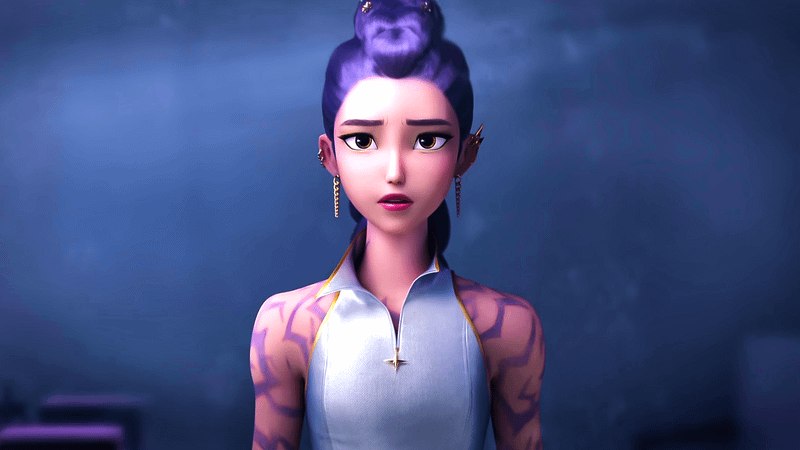
Unable to wait, Rumi releases the new track, “Golden,” ending their break.
Debate
The song is a hit, and Huntrix is excited to perform it live for the first time. It will be a whole new chapter in their lives. Alone, Rumi takes off her jacket, revealing her bare arms, covered with the patterns of a demon. These patterns are her life problem, and by hiding them, she’s approaching things in the wrong way. She sings:
Like the girl they all see
While practicing for the live performance, Rumi’s voice begins to fail, and she can’t complete the song. She heads outside to collect her thoughts, discovering that the pattern has spread to her neck. Rumi’s father was a demon, a secret Celine ordered her never to share, even with her closest friends.
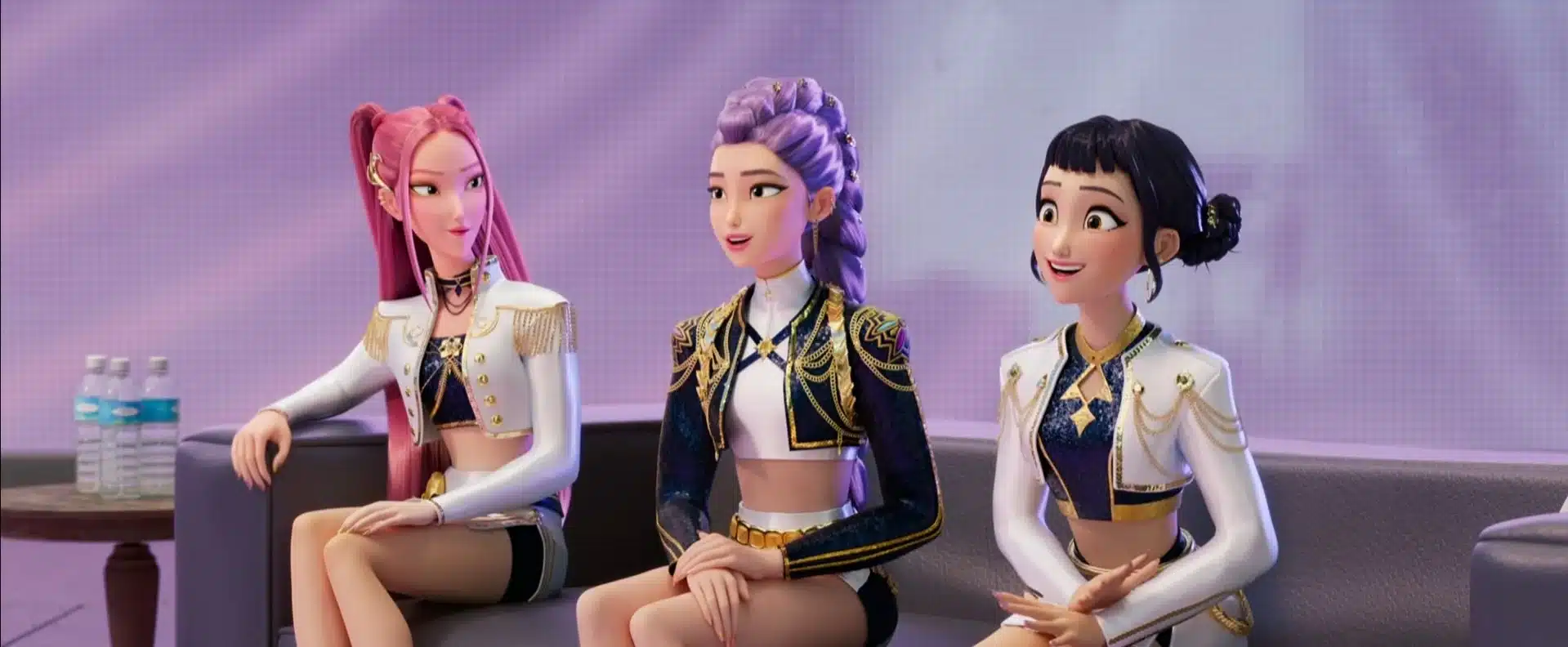
But the moment creates panic. If Rumi can’t sing, she can’t help unite the fans, and if they can’t come together, Huntrix will never be able to create the Golden Honmoon and stop Gwi-Ma. She’s caught between two equally unfortunate choices: hide her patterns and risk losing to Gwi-Ma, or tell her friends about her true identity and risk losing them.
The three performers visit a healer (Daniel Dae Kim) who might be able to help Rumi, and he tells her that in order to heal a part, one must understand the whole. Claiming that he can’t see the problem because Rumi has so many walls up, he sends her on her way with some tonics.
Break into Two
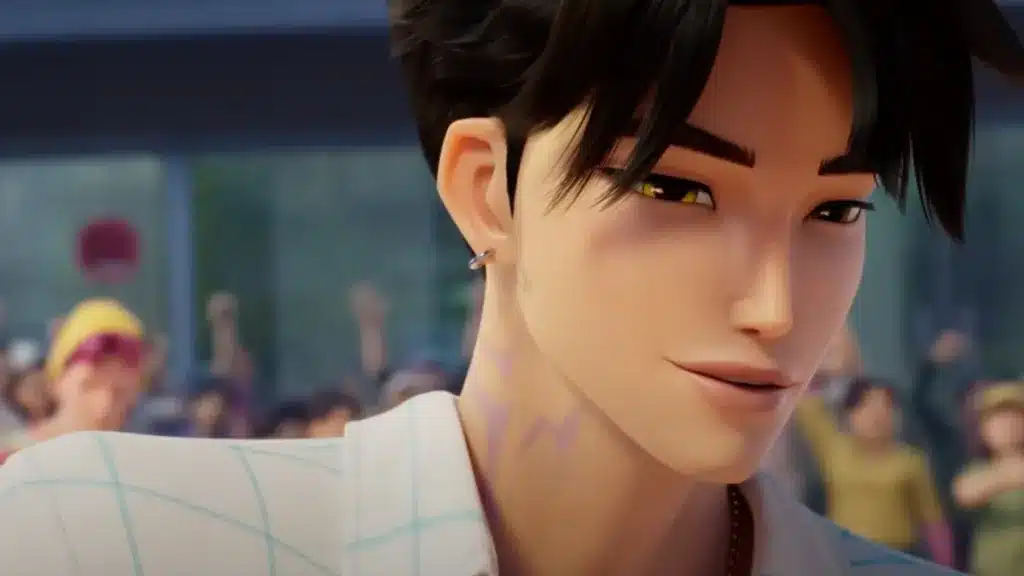
As Huntrix leaves the doctor’s office, they bump into a group of boys. Moments later, they reveal their true identities: a new boy band called the Saja Boys. Their goal becomes apparent as the crowd fawns over their singing (and good looks). Huntrix now has competition for their fans.
B Story
The lead singer of the Saja Boys, Jinu, will serve as the relationship story. His past choices and mistakes will help Rumi discover the theme and embrace her true self.
Fun and Games
In this upside-down antithesis world, Huntrix isn’t the only show in town anymore. They realize that the Saja Boys are demons in disguise, and just when Huntrix was going to achieve their A Story goal and create the Golden Honmoon, their fans are becoming divided.

Huntrix prepares to take on the Saja Boys at a game show and kill them, but Jinu sees them and publicly puts the spotlight on the girls. While the rivalry seems like a fun stunt to the public, after the show, Huntrix chases the Saja Boys down into a bathhouse in an attempt to dispose of them. Instead, they are surrounded by demons, and as Rumi chases after Jinu to fight him, her sleeve is ripped, revealing her patterns. Jinu covers them up for Rumi before Mira and Zoey see them, a move that confuses Rumi.
Huntrix works to create a diss track to expose the Saja Boys and win back their fans. As Rumi sorts through all that has happened, she receives an invitation to meet with Jinu. She goes with the intention of killing him, but the more she talks to Jinu, the more she is confused, learning of his past and how Gwi-Ma’s voice fills him with constant shame.
As Huntrix continues performing and dispatching demons, the promise of the premise is front and center. When a Huntrix autograph session is hijacked by the Saja Boys, Rumi tries a new approach by inviting the rival band to sit with them. Even Jinu begins to question his loyalties when a young fan hands him a drawing telling him that he has a beautiful soul.
Rumi continues to hide her true nature from Mira and Zoey, while the Saja Boys gain more fans and people go missing, their souls harvested to feed Gwi-Ma.
Midpoint
As the Idol Awards approach, time clocks tick and the stakes are raised. Rumi decides to meet with Jinu, and A and B Stories cross as she proposes a plan to him: help Huntrix win the Idol Awards, and the Golden Honmoon will seal Gwi-Ma away forever, freeing Jinu from the constant voice in his head reminding him of his past. That, and Rumi will be free of her patterns with no need to hide anymore.
Bad Guys Close In
While there are external bad guys of increasing amounts of demons as the Honmoon deteriorates, Rumi faces her own internal bad guys that threaten to tear apart Huntrix. The lyrics to the diss track, “Takedown,” don’t sit well with Rumi, as they’re full of hate toward demons.
While fighting demons atop a passenger train, Mira questions what Rumi is hiding. Rumi turns those accusations against Mira and her insecurities, further driving a wedge between them. The Hunters defeat the enemies, but quickly realize that their squabbling has resulted in the demons being able to steal the souls of the passengers.
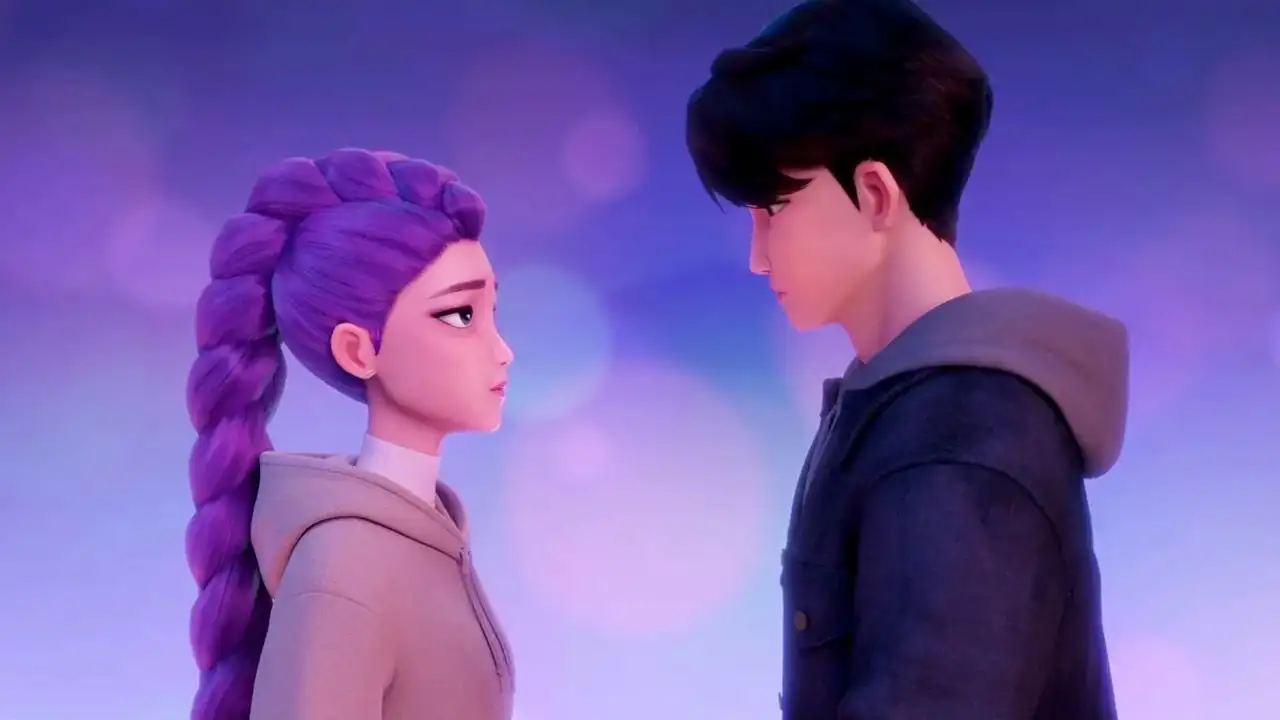
Rumi once more meets with Jinu, and while Jinu doesn’t think he can help her, she tells him that he already has. “I spent my whole life keeping this secret, this shame of what I am,” she tells him, “and the more I hid this shame, the more it grew and grew until it started to destroy the one thing that gave me a purpose, my voice.” Meeting and talking with Jinu, she says, has healed her voice. Together, they sing, in “Free”:
Till it’s weightless
Jinu states that something similar has happened to him: talking with Rumi has helped to silence Gwi-Ma’s voice inside his head. He tells Rumi that he will make sure the Saja Boys lose at the Idol Awards. Just as Rumi leaves, though, Jinu hears Gwi-Ma’s accusations again, how Jinu left his family to suffer. Even demons have their own internal demons.
At the Idol Awards, Bobby tells the girls that the Saja Boys have gotten into an argument, which means Huntrix is up to perform. For the first time, the group performs “Golden” live on stage. Now, the lyrics have a new meaning for Rumi as she sings:
That’s who we’re born to be!
Mira and Zoey see Bobby being kidnapped by demons and leave Rumi to finish the song on her own, the Honmoon beginning to turn gold. Victory is in sight! Just then, Mira and Zoey discover that Bobby was a demon in disguise; Rumi is all alone as two demons posing to be Mira and Zoey begin to sing “Takedown,” ruining Rumi’s moment:
It’s ugly as sin…
In front of the whole world, they take off Rumi’s jacket and expose her patterns.
All Is Lost
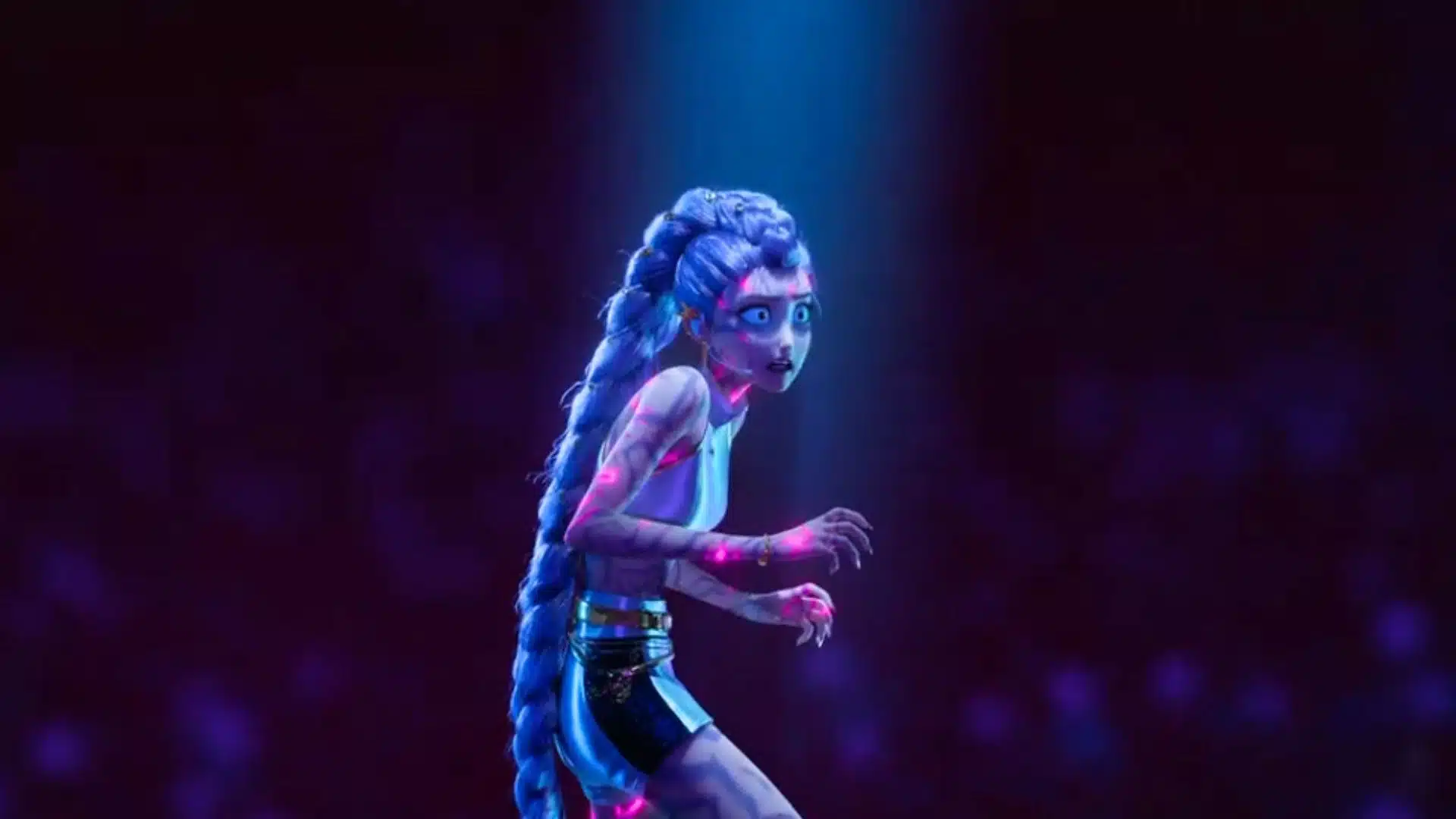
Mira and Zoey see Rumi for the first time as she is. There’s a whiff of death not only for the world, but also for Rumi and her friends. As Rumi’s patterns glow and her demonic nature intensifies, Mira and Zoey take a step back.
Dark Night of the Soul
As A and B Stories meet, Rumi confronts Jinu, who tries to tell Rumi it was all a lie, but Rumi knows differently. Jinu finally reveals the truth about his past, the shame he has carried for 400 years: he selfishly abandoned his family in their time of need.
At the Idol Awards, the Saja Boys have won, and fans begin to hear the voice of Gwi-Ma, exposing their biggest fears and insecurities. They begin to head to the stadium to see a special live performance of the Saja Boys.
Rumi goes to see Celine, who insists that they can still cover up what has happened, but Rumi only wants to be accepted for who she truly is. “If this is the Honmoon I’m supposed to protect,” Rumi tells Celine, “I’m glad to see it destroyed.”
The thematic premise is resonating: darkness and light have come together, and Rumi is whole now because she has accepted her true self.
Break into Three
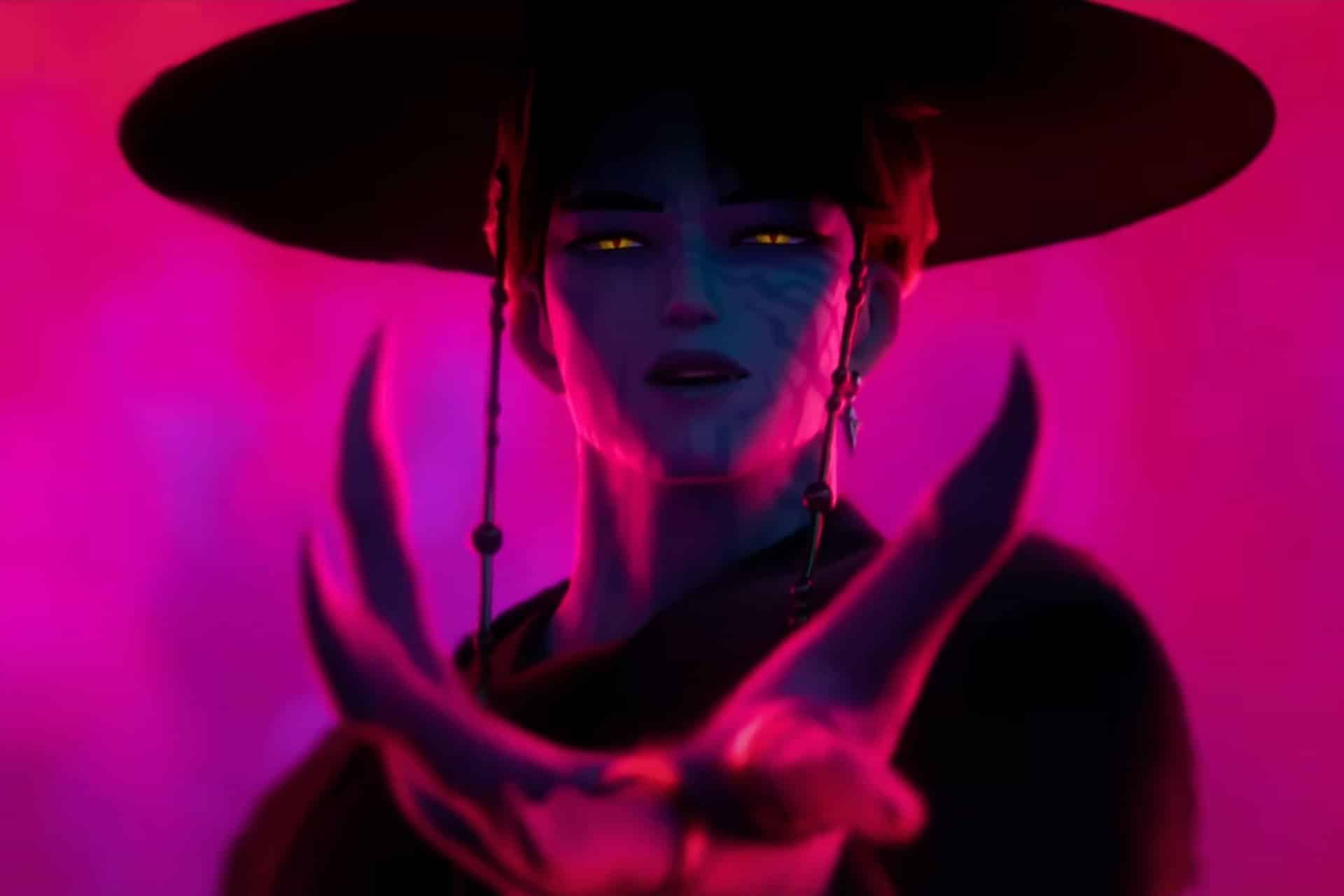
As the Saja Boys perform at a stadium with Gwi-Ma becoming fully manifest, ready to steal souls, Rumi appears. Now, she’s in her synthesis world, finding acceptance that the Honmoon is gone so that they can make a new one.
Finale
Reborn through the theme, Rumi sings “This Is What It Sounds Like”:
Trust you to be on my side
This is what it sounds like!
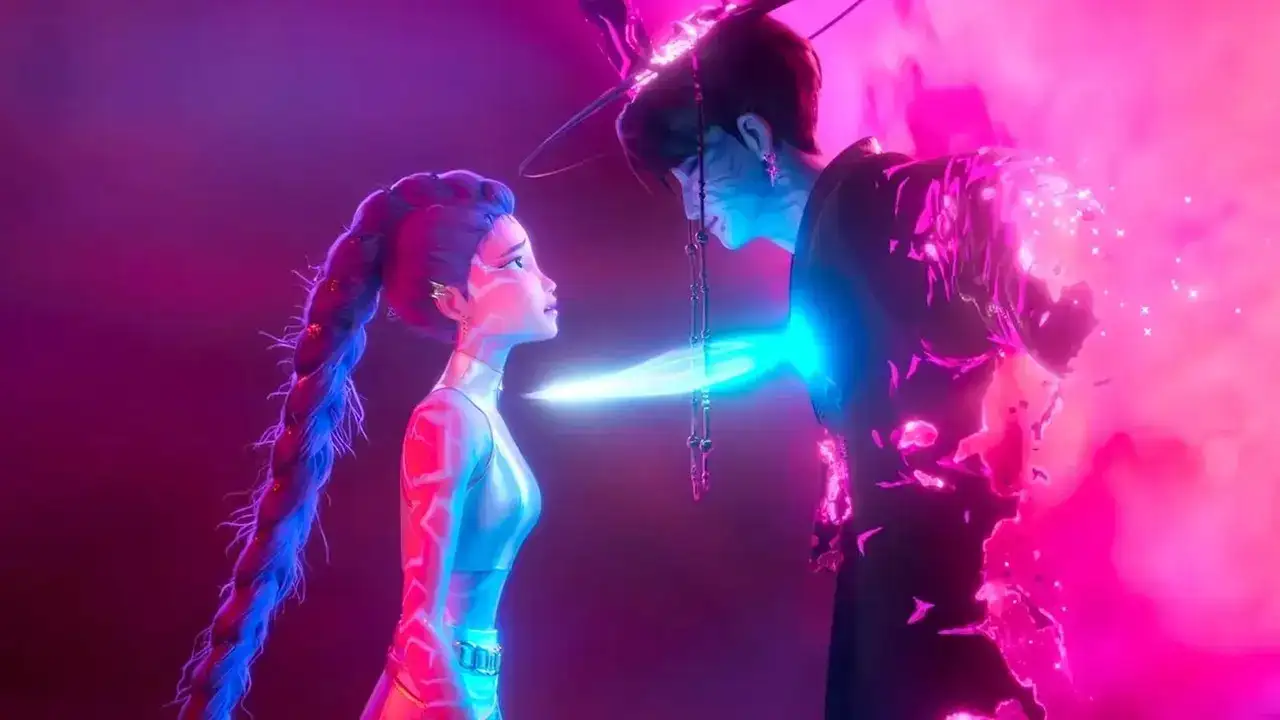
Mira and Zoey reunite with Rumi, their relationship healed, as they fight demons and take on Gwi-Ma. As Gwi-Ma uses his full power to strike down Rumi, in a high tower surprise Jinu sacrifices himself to save her, giving Rumi his soul. He’s found the good in himself, and now, Rumi and Huntrix dig, deep down, to unite the audience to defeat Gwi-Ma through their unity and song.
Final Image
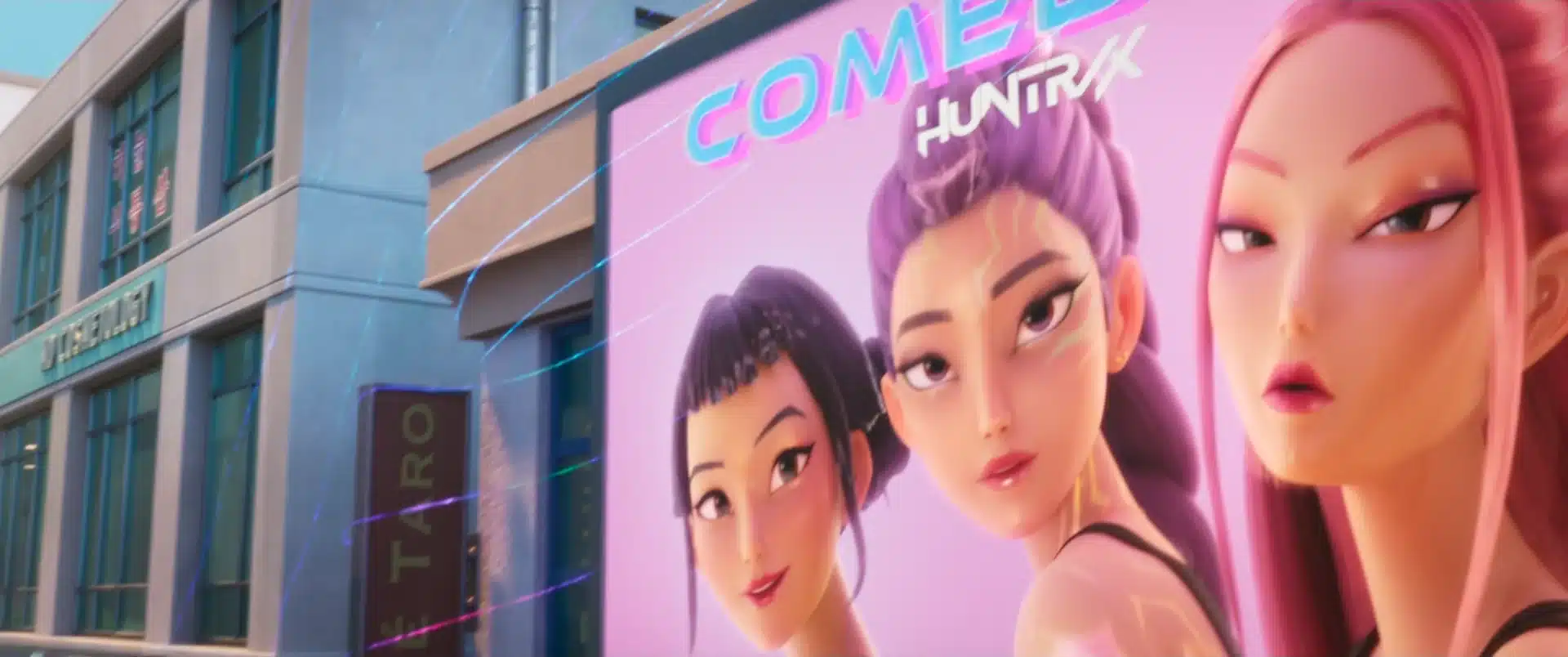
Huntrix is stronger than ever, and after a very brief break, they are ready to inspire their fans again. A billboard advertises their comeback, but this time, Rumi’s patterns are visible now that she’s overcome the fear of letting the world see her true self.
Check out the Beat Sheet Analyses for these other Oscar®-nominated films:














3 Comments
Firstly, the genre should be superhero; you have confused the subjective journey of the hero with the genre of the film.
Secondly, the catalyst is not Rumi’s decision to release a new single; it is Jinu presenting her new plan to Lord Demon.
I think you could classify it as Rite of Passage. It’s basically Frozen with demon marks instead of ice powers. The point of both is self-acceptance and expressing who you really are rather than hiding it away. You don’t really find that in Superman movies.
Why isn’t KPCH classified as a Buddy Love story? Imperfect hero. Rumi sees herself as imperfect/flawed because she has patterns inherited from her father, check. A counterpart who will lead her to learning her life lesson. Jinu, check. A complication. Demon vs demon hunter, check. The promise of the premise is that it’s a love story, check.
KPDH really doesn’t fit Rites of Passage at all. Being a demon hunter who has demon patterns is not a relatable, common life problem.
Interestingly, if the movie was focused on Jinu’s arc, it would definitely be an Institutionalized story. He’s a definite brando and makes the ultimate sacrifice to escape Gwi-Ma by giving Rumi his soul and thus helping her “burn it all down”.