

Home › Beat Sheets › Backrooms Beat Sheet Analysis
Backrooms Beat Sheet Analysis

Jamie Nash
Why we chose to do a Save the Cat!® beat sheet analysis of Backrooms
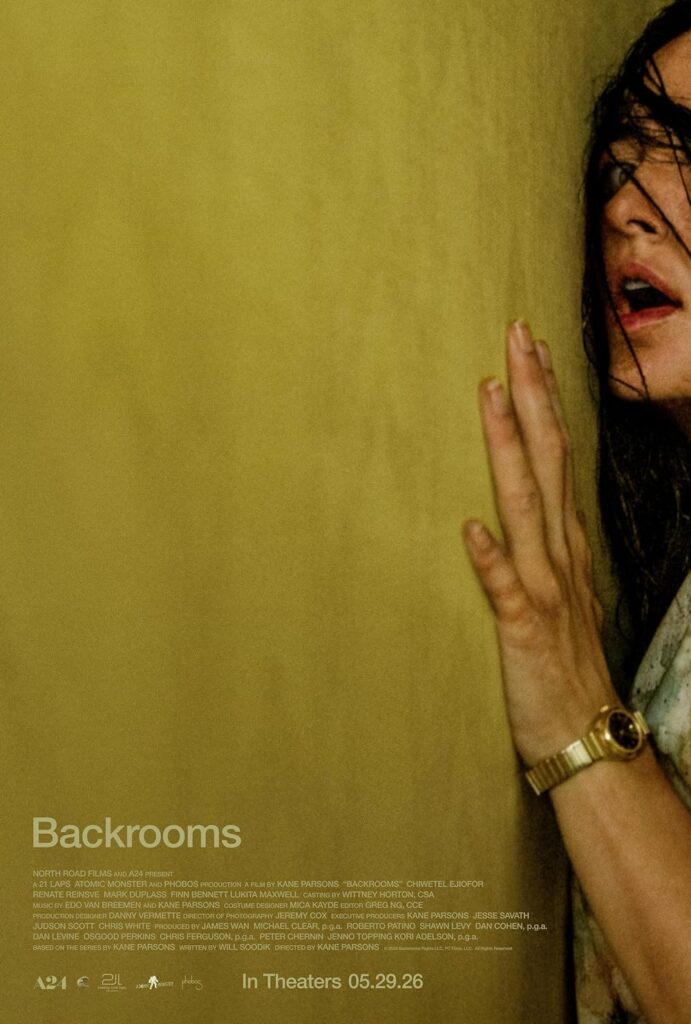
Backrooms is a global phenomenon.
One of the fascinating things about the film is that beneath the analog horror aesthetics, liminal dread, and found footage chaos… it’s actually operating on a surprisingly classical Save the Cat! structure. The movie bends that structure in some shocking horror-specific ways, but the bones are absolutely there.
Written By: Will Soodik
Directed By: Kane Parsons
Genre
Monster in the House
A hero is trapped in some location or situation (aka the “house”) and must survive a monster (human or otherwise). There must be a sin committed—often greed—prompting the creation of a supernatural being that comes like an avenging angel to kill the sinners. Monster in the House stories are commonly found in horror movies, urban thrillers, or comedies about people or things that just won’t go away.
The 3 elements of a Monster in the House story
- A monster that is supernatural in its powers—even if its strength derives from insanity—and “evil” at its core.
- A house, meaning an enclosed space that can include a family unit, an entire town, or even “the world.”
- A sin. Someone is guilty of bringing the monster in the house… a transgression that can include ignorance.
Save the Cat! Beat Sheet Analysis for Backrooms
Let’s talk about the movie’s Monster in the House elements.
In Backrooms, we have a unique case of sorts where the Monster is the House! Much like The Shining or 1407, the House serves as a character or a living entity. But it also presents a geographic trap for the heroes—curiosity lures its victims inside its liminal space, and once you go too far, you may never find your way out.
Yes, there are monsters within the Backrooms. But those monsters are varied and products of the sinister effects the location has on those who stay there too long. It’s like its monstrous superpower is to generate monsters from the traumas of those who venture within.
The Monster in the House’s sin concerns Async (the mysterious tech company that used to make MRIs that lurks in the background of the movie). Like the scientists in Jurassic Park, the crew of Event Horizon, or the corporate dreamers behind Weyland-Yutani in Alien, Async commits an act of technological hubris. In pursuit of progress, they tear open a doorway into something they fundamentally do not understand. Instead of danger, they see dollars.
The Backrooms are the consequence of their greed and arrogance.
Opening Image/Teaser

The movie opens with a tense found-footage sequence that essentially functions as a miniature version of the entire film. This is something I often encourage horror writers to do: approach your opening as an attention-grabbing short film microcosm about everything awesome about your concept (think Drew Barrymore getting taken out in Scream).
If your first five pages feel like a complete horror experience on their own, audiences lock in immediately. And they’re actually begging for some relief that will come in the Set-Up.
If you’ve heard me on podcasts or read Save the Cat!® Writes Horror, you know that I think that most writers are underusing one tool in this terror toolbox… and that’s Dread!
In the book, I describe a technique I call DREAD FLAGS. Essentially, they’re little red flags that the audience (and sometimes the heroes) picks up that signal something horrible is going to happen.
The Backrooms opening sequence is so stuffed with Dread Flags, it practically uses everyone in the book (My book! Buy it now!). I’m not sure I even got ‘em all, it was so stuffed. But here are a bunch, along with the type of Dread Flag categorized in the book:
| ACTION | DREAD FLAG TYPE |
| We open with a found footage sequence | FOUND FOOTAGE |
| The limited POV of the unseen person in the Hazmat suit | EYES OFF THE PRIZE |
| Long, slow exploration sequences where “nothing” happens | SLOW PACE |
| Uncanny Valley liminal hallways | DISTURBING DECOR |
| Buzzing and sometimes unstable fluorescent lights | FLICKERING LIGHT |
| Eerie fluorescent hum of the lights | ASSAULT ON THE SENSES |
| Dead bird on wall | ANIMAL ENCOUNTERS/INFESTATIONS |
| Weird stacked furniture | DISTURBING DECOR |
| All-too-still atmosphere | ALL TOO PEACEFUL |
| Long stretches of silence | TOO QUIET |
| Strange “monster-like” noises in the distance | HOWLS IN THE DARK |
| Foreign-language radio voices | THEY’RE HERE |
| 2D human cutout with radio | DISTURBING DECOR |
| Going deeper and deeper into the Backrooms | TOO FAR FROM SHORE/ENTERING THE KILL ZONE |
| Discarded shoes | LEFT FOR DEAD |
| Endless maze-like architecture | WEIRD DREAMS & SURREAL EXPERIENCES |
| Strange power fluctuations | TECHNICAL DIFFICULTIES |
| Mysterious TV signal | THEY’RE HERE |
| Cords and wires running through halls | OMINOUS EVIDENCE |
| Abandoned research traces | DESERTED AND ABANDONED POSTS |
| Human spaces without humans | DESERTED AND ABANDONED POSTS |
| Impossible architecture and looping geography | WEIRD DREAMS & SURREAL EXPERIENCES |
The teaser serves as a microcosm for the entire concept. It teaches us the emotional language of the Backrooms before the real story even begins, and gives a promise of the terror to come.
Set-Up

Interestingly, the movie first introduces us to Mary (Renate Reinsve), the therapist, even though we assume Clark is the protagonist. At first, it almost feels strange structurally. Why give a seemingly lesser character important POV scenes of this mysterious house with hands in concrete? This image and prioritizing her introduction will pay off in the second half of the movie.
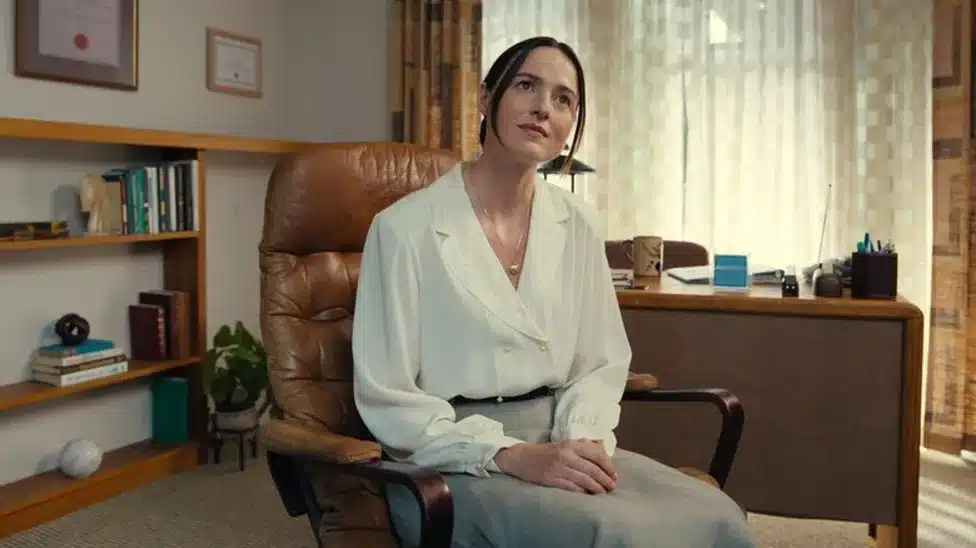
Meanwhile, our true hero, Clark (Chiwetel Ejiofor), is introduced as a man trapped in emotional loops. His marriage has collapsed. He’s bitter, isolated, and emotionally frozen. The shard of glass from the day his wife kicked him out of his own house is role-played in his therapy session.
Mary lays out how people choose the path of least resistance, and emotional stagnation becomes a prison. Basically, she’s describing Stasis=Death. Clark’s stuck in a sort of purgatory of his own making.
Blake Snyder said the Set-Up should lay out the things that need fixing and that they usually fall into five different types:
Changes in attractiveness and/or personality: Clark is intense… maybe even deranged. He lives in his store. His clothes look slept in. He’s kind of given up.
Strained personal relationships: This is evidenced by his relationship with his ex-wife. He’s still angry. He doesn’t seem to have anyone in his life. He even acts belligerently toward his therapist, the one person who will actually listen.
Not being entrusted with responsibility or not able to handle responsibility: He owns his own furniture company. It’s failing big time. His attempts to make commercials like his rival are embarrassing and make him look foolish.
Being invisible to key people: His wife wants nothing to do with him. And his store, which is everything he has, has zero customers. From the world’s standpoint, he’s invisible. Nobody would miss him if he just disappeared.
Others don’t believe in you, or you’ve given up on yourself: This may be the biggest one. Clark has stopped believing change is possible. He blames everyone else. And everyone looks at him like he’s a loser.
Theme Stated

This is classic Save the Cat! Theme Stated territory. Early in the movie, a character calls the hero on the flaw. Here, the therapist delivers the movie’s thematic spine early: “You push people away before they can hurt you.”
The movie is ultimately about isolation, avoidance, and the seductive comfort of emotional imprisonment. Stasis = Death!
Clark becomes a miniature version of Async’s sin. Faced with the pain of his failed marriage, isolation, and emotional stagnation, he chooses obsession over introspection. Rather than confront his wounds, he disappears into the Backrooms. Like Async, he becomes consumed by exploration, documentation, and proof.
The maze becomes a distraction from self-examination—a place where he can endlessly wander rather than heal. In that sense, both Async and Clark make the same mistake: they pursue the infinite instead of confronting what’s broken right in front of them.
It’s the sin of “Playing God.” Async is doing it on a macro level, Clark on a micro level.
Catalyst

After a history of weird power fluctuations, an electrician notices some weird and seemingly pointless switches in the breakers. Clark has never seen them before.
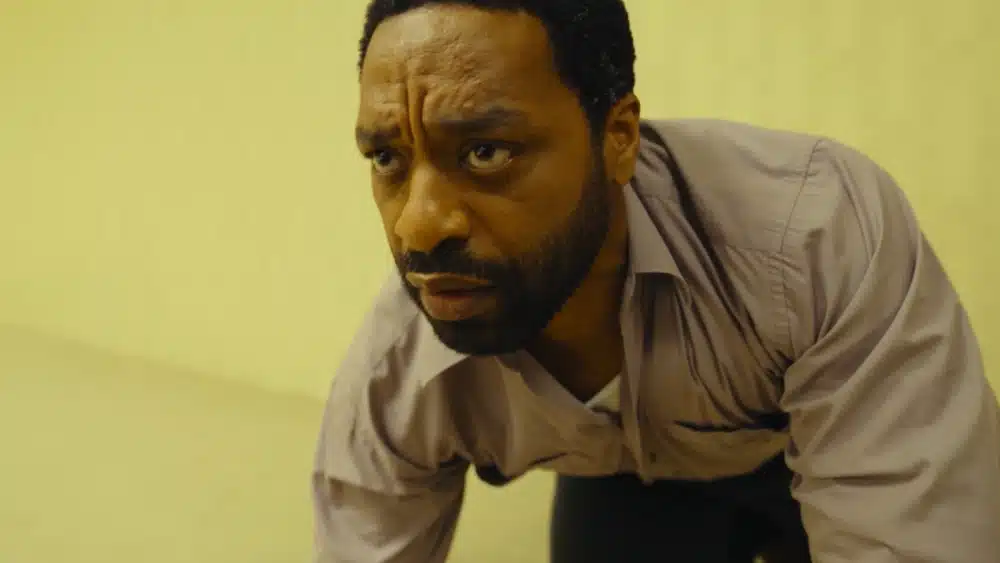
That night, Clark encounters a strange glitchy television signal of the Backrooms and checks the breakers to see what’s going on. Electrical anomalies begin. The world glitches. Clark No Clips right through the store’s basement wall into the Backrooms.
Debate

Clark ventures deep ahead. Encountering an Uncanny Valley of sights. With every new room, he ventures further away from safety (ENTERING THE KILL ZONE) and encounters DISTURBING DÉCOR and geography that don’t make sense.
He tests the space, explores it, tries to understand its rules, and questions his own sanity. Is this real? Is he losing his mind?
He gets a lay of the land but also sees the Backrooms’ weirdness and gets a sense that there might be something dangerous inside.
Break into Two

Upon escaping back to his store basement with a stool he’s swiped from the Backrooms, Clark becomes obsessed. Breaking into Two’s usually have both a push and a decision. Surviving his first encounter with the backrooms is the push. The decision—which plays out offscreen—seems to be to explore this new world and map it out all on his own.
B Story

Clark returns to his therapist, Mary, and fills us in on what’s been happening in the offscreen story: over the course of many nights, he’s been exploring and mapping out his otherworldly discovery. He prattles on about theories and things he’s learned. He sounds certifiable.
When Mary doesn’t believe him, it crystallizes his Act Two goal: he needs proof.
Fun and Games

Clark enlists his assistant manager and her boyfriend (they filmed a goofy store commercial in the Set-Up) to document the Backrooms on video.
The Fun & Games section devolves into another tense found footage sequence.
This is pure promise of the premise material, an extended tour of the liminal space dread of the Backrooms. The sequence provides a mix of tension and awe but ultimately leads to terror as they decide to explore a lower level, sending the cameraman down with a rope (another Dread Flag: I’LL BE RIGHT BACK).
Midpoint - False Victory

Disaster strikes, and all three are violently pulled into the lower section. With no simple way to escape back into the basement, an unseen monster threatens and chases them.
The Midpoint delivers both victory and catastrophe. The group finally gets undeniable proof. But the monster seemingly overtakes them—leaving us to wonder if our hero, Clark, is dead.
All good horror movies have an IN THE HANDS OF A MADMAN MOMENT that makes the audience think the director of this story is completely unhinged, and anything can happen. To do this, the movie makes a common horror movie move : THE HERO SWITCH.
Clark is seemingly taken out! And similar to classics like Psycho, The Fly, The Shining, and most recently Barbarian, the Save the Cat! structure expectations themselves feel destabilized. The audience realizes: anything can happen now.
Got stuck with your story?
Save the Cat!® Story Suite software brings the method and your story work into one clear, organized workspace.

Bad Guys Close In

We suddenly realize why we got so many POV moments with Mary (a seemingly supporting character) as she becomes the new Hero of the story.
She’s activated by the Midpoint and gets her own Story DNA.
Hero: Find Clark.
Obstacle: The mystery of the backrooms.
Stakes: Clark’s life and her need to make sense of the world.
At the same time, the movie digs deeper into her own emotional wound. We learn about her childhood and her overprotective and agoraphobic mother, who imprisoned Mary inside the house. Like Clark, Mary is also stuck in a loop dealing with the trauma from her past.
Mary searches for Clark. She ultimately finds the door to his store unlocked. Having heard the story about his discovery in the basement, she heads there and enters the Backrooms.
Her exploration is one of disbelief. But also one of Suspense, since we now know more about the mysterious labyrinth than Mary. And we know danger lurks ahead.
All Is Lost

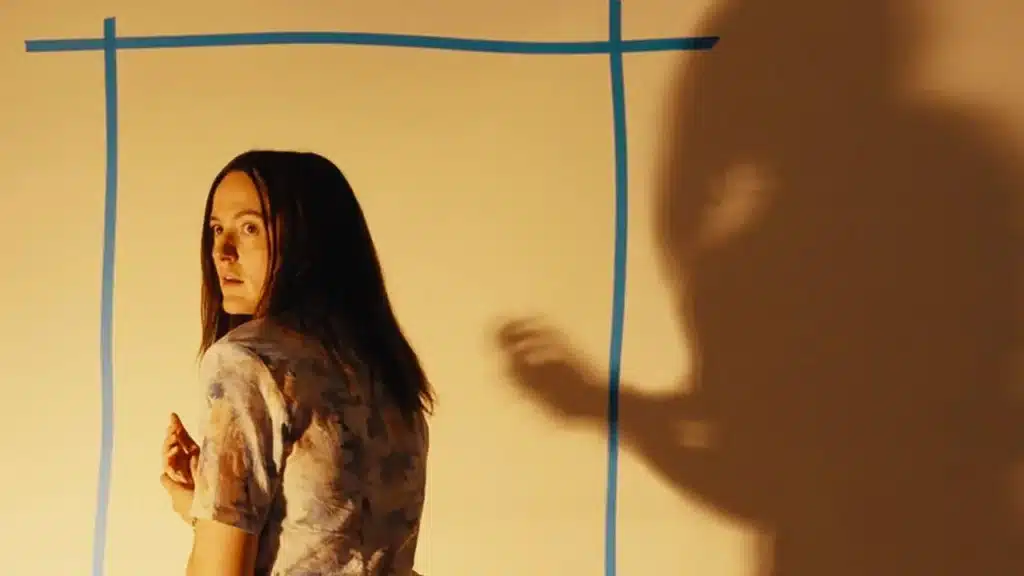
A monster eventually stalks her, and she encounters Clark, who is more deranged than usual but seems to have a deeper—almost Half-Man understanding—of the Backrooms now.
At first, he seems like he might save her, but then the movie pulls another horror-specific structural move:
The hero becomes the monster.
Like Jack Torrance in The Shining or Seth Brundle in The Fly, Clark has been psychologically consumed by the Backrooms. It’s a HEEL TURN. Clark attacks Mary and puts her in a chokehold. We cut to black.
Like all Monster In the House stories—even the slow burn ones—the story will ultimately turn into a brutal battle for survival, and this is where the shift happens. All MITH movies have a “WE’RE TRAPPED WITH A MONSTER!” BEAT… and this is it!
Dark Night of the Soul

In an almost Lynchian scene, Clark recreates the therapy role-play exercise with Mary bound to a chair, surrounded by the grotesque Backrooms figures. The scene becomes increasingly surreal and violent, and the Uncanny Valley is in full effect.
Mary finally reaches the breakthrough: Clark cannot fix himself because he does not want to change. This is important because the movie reveals itself as a tragedy. Her own therapy seems to be something she needs to learn, and she will through her dark survival. In the words of Sam Raimi’s rules of horror: “You must taste blood to be a man.”
But Clark won’t, because in a tragedy, the protagonist refuses the lesson.
Clark admits: “I like it in here.” Stasis = Death, permanently.
Break into Three

Clark refuses growth and is immediately killed by the monstrous peg-legged Pirate Clark creature. And Mary is chased through the maze by the monster. In the violence, Mary escapes. The chase is on!
JAMIE NASH HORROR WEBINAR
Uncover the storytelling choices behind Backrooms—and learn how to apply those same techniques to your own story!
Finale

The Finale transforms into a pure survival sequence as Mary is chased through the maze. She must finally dig deep down and use her own pain as strength.
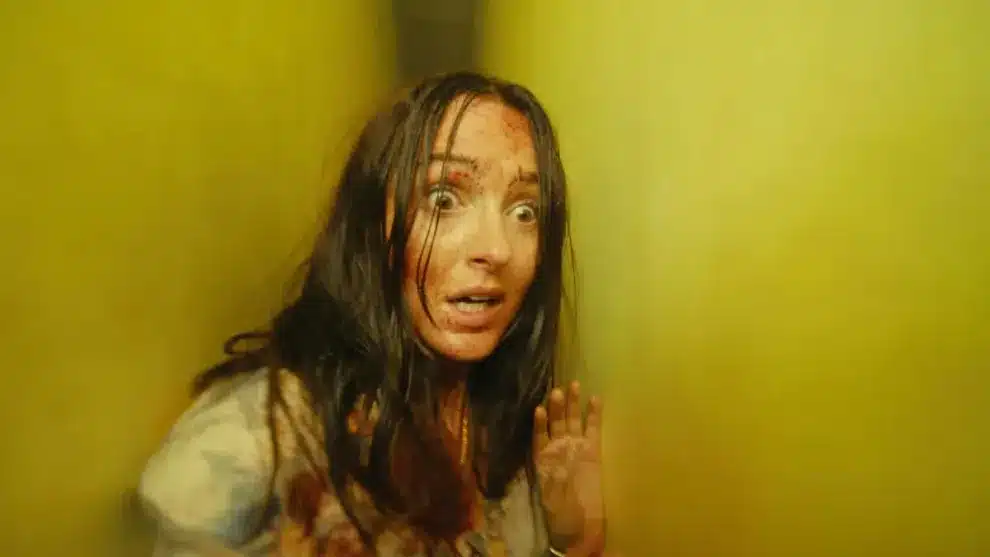
Pinned beneath the creature, she pulls out her own symbolic shard of glass—the piece of concrete tied to her childhood wound—and brutally kills the monster.
This is classic Save the Cat! Finale structure: the transformed hero survives by applying the emotional lesson physically.
Final Image/Evil Lives On

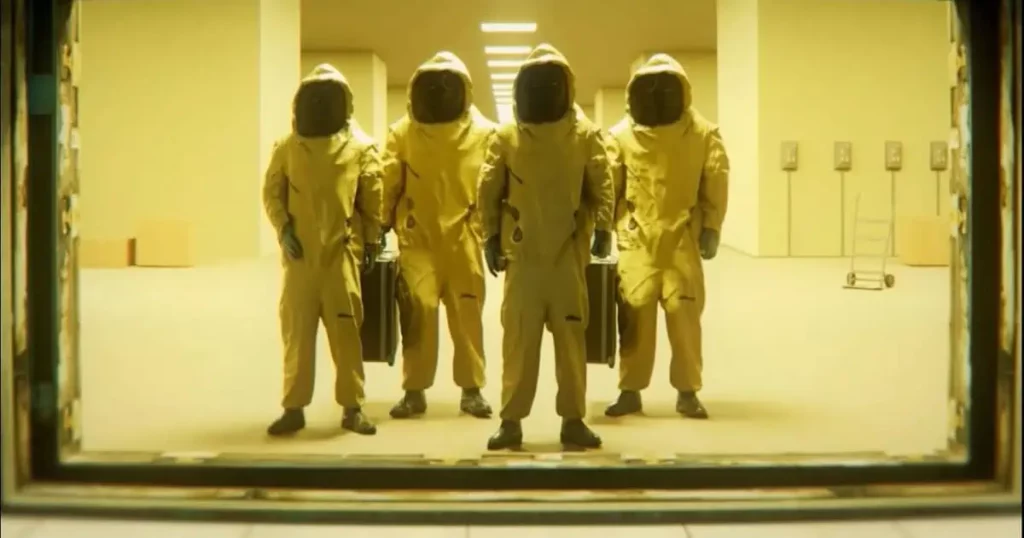
The epilogue serves as an extended Evil Lives On sequence. The Backrooms continue echoing reality in warped form. The cycle persists.
Unlike Clark, Mary escapes the loop. That’s the true thematic resolution: some people choose emotional prisons. Others finally fight their way out.
But we see inside the Backrooms and realize it’s waiting for its next victim to No-Clip inside, and a franchise is born.
Share this article:





Similar Articles








Subscribe to Save the Cat! Newsletter