

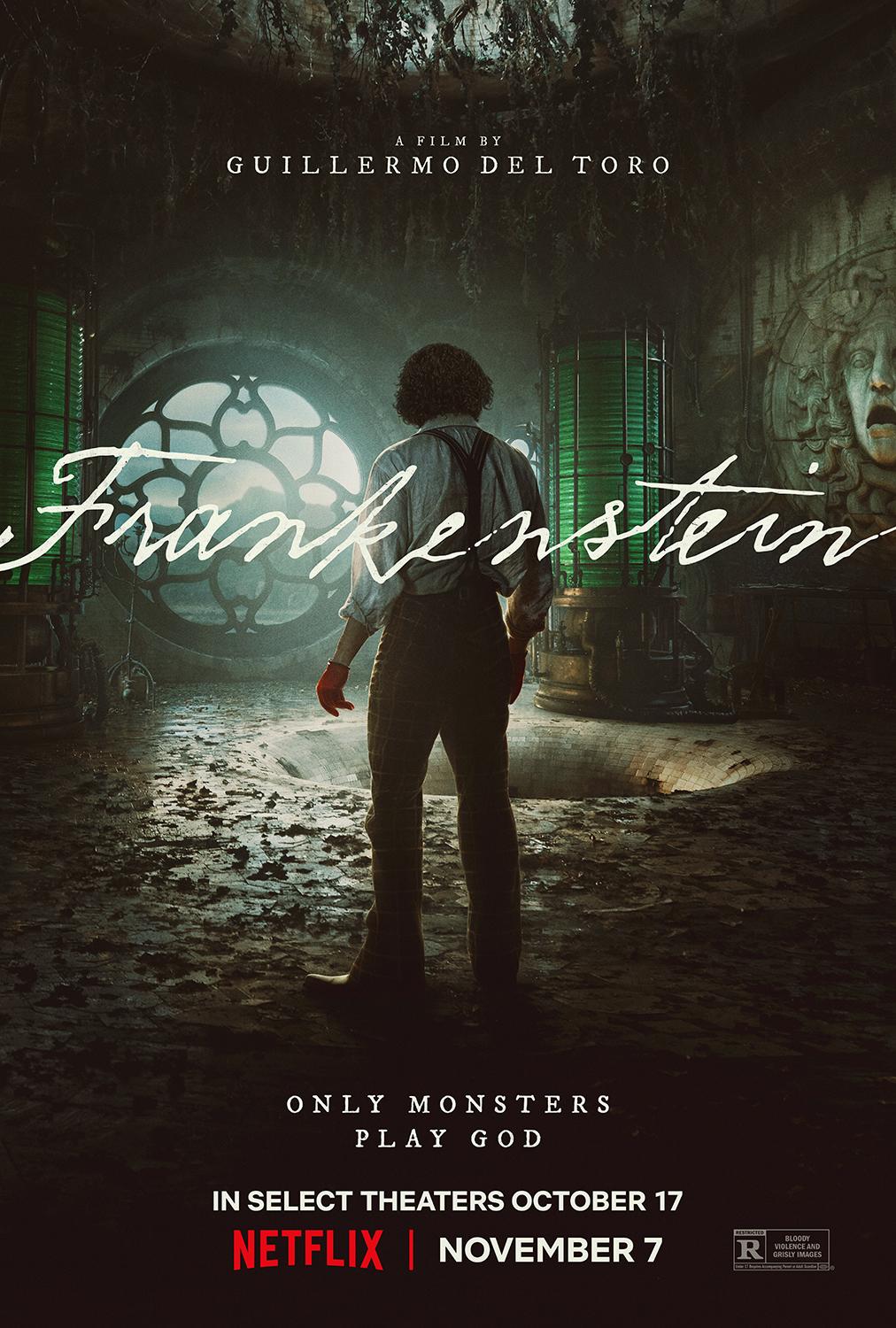
 Why We Chose to Do a Save a Cat! Beat Sheet Analysis of Frankenstein
Nine Oscar® nominations, including Best Picture and Best Adapted Screenplay. DGA: The genre-defying craftsman’s sumptuous retelling of Frankenstein honors the essence of the book in that it’s not so much straight-up horror as tragedy, romance and a philosophical reflection on what it means to be human.” – David Rooney, The Hollywood Reporter
Based on: the 1818 novel “Frankenstein; or, The Modern Prometheus” by Mary Shelley
Directed By: Guillermo del Toro
Genre: Monster in the House (subgenre: “I’m the Monster”), with a dash of Buddy Love

A hero is trapped in some location or situation (aka the “house”) and must survive a monster (human or otherwise). There must be a sin committed—often greed—prompting the creation of a supernatural being that comes like an avenging angel to kill the sinners. Monster in the House stories are commonly found in horror movies, urban thrillers, or comedies about people or things that just won’t go away.
The 3 elements of a MONSTER IN THE HOUSE story are:
1) A monster that is supernatural in its powers—even if its strength derives from insanity—and “evil” at its core.
2) A house, meaning an enclosed space that can include a family unit, an entire town, or even “the world.”
3) A sin. Someone is guilty of bringing the monster in the house… a transgression that can include ignorance.
I’m the Monster Cousins: The Shining, The Fly, American Psycho, May, The Wolfman
Save the Cat! Beat Sheet Analysis for Frankenstein
Opening Image
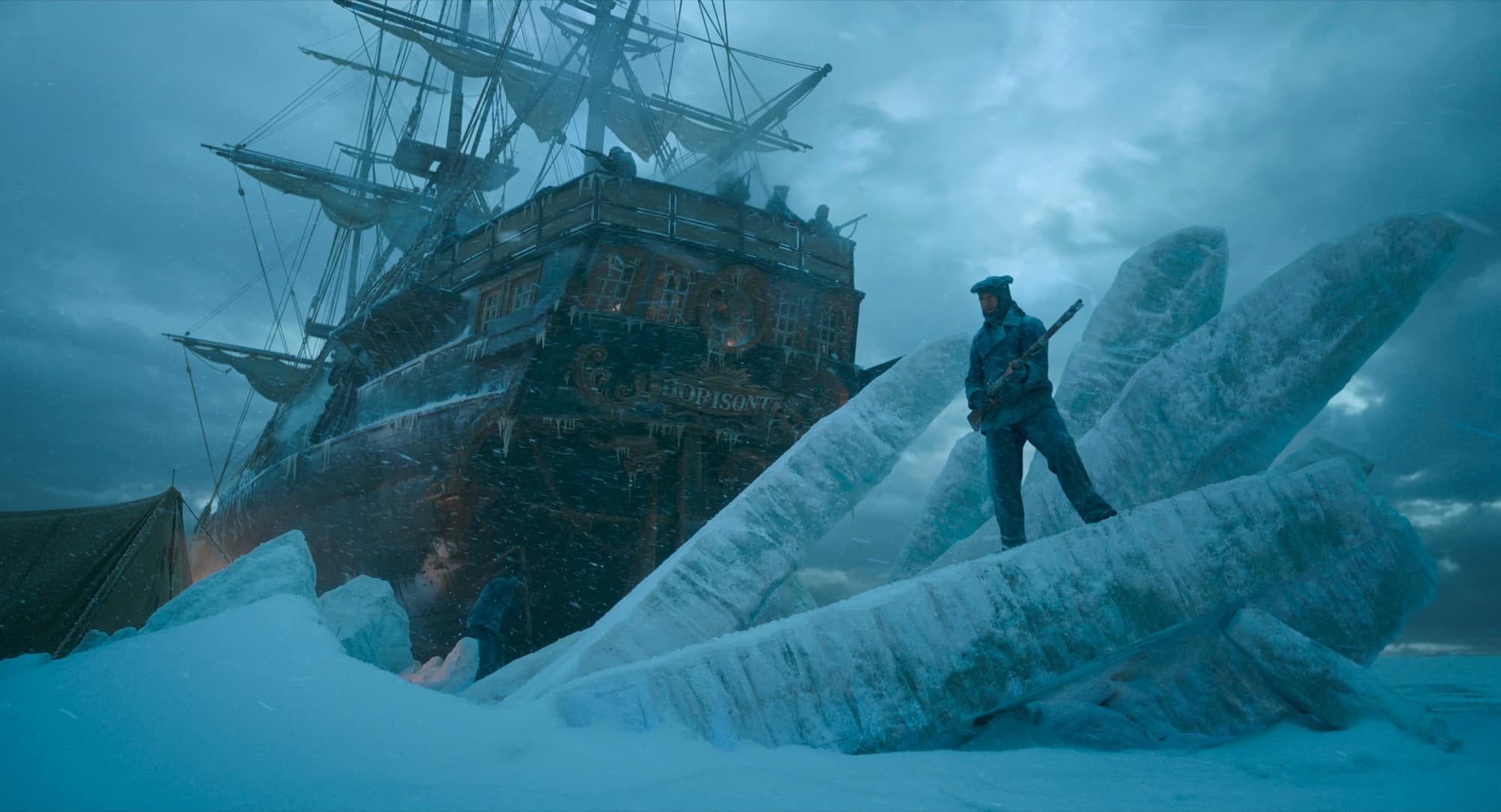
Helpfully labelled as “Prelude,” our dread start Opening Image of a massive ship trapped in the ice sets the tone for a film about human ambition vying with human limitations. The year is 1857 and the Royal Danish Navy Ship, Horisont, has been stymied in its attempt to reach the North Pole.
The freezing and exhausted sailors know their situation is dire, but in the hands of the master monster-maker, del Toro, they ain’t seen nothin’ yet, as a literal supernatural murdering beast suddenly shows up demanding they hand over Victor Frankenstein (Oscar Isaac), a gravely injured man discovered out in the tundra.
Theme Stated
Captain Anderson (Lars Mikkelsen), a bit of a Dr. Frankenstein mini-me in his obsession with conquest, asks Victor “What manner of creature is that? What manner of devil made him?” Who is the true monster in this Monster in the House, the roaring 7-foot tall behemoth that offs six men in the first few minutes of the film or the one who committed the sin of creating him?
Del Toro is faithful to Mary Shelley’s novel, not so much in the plot points, but in the questioning of the hubris of humankind. Add in some father-son angst (Victor moans, “I did; I made him,” with all the shame of a lousy dad bemoaning his wayward kid) and a sprinkling of Catholic guilt imagery, and you’ve got a Theme that promises to propel the viewer through a two and a half hour run time.
Set-Up
“Victor’s Tale” is the onscreen super that designates our thesis world, where the young Victor lives in a mansion with his cold, punishing father, Baron Leopold Frankenstein (Charles Dance) and beloved French mother, Claire (Mia Goth). The Baron is a brilliant surgeon who obviously loathes Victor and whips him when he makes a mistake in his medical studies.
Catalyst
Claire dies giving birth to Victor’s brother, William.
Debate
Victor despairs over her loss and is certain that his father, the most distinguished doctor of his day, either purposefully allowed Claire to die or simply failed because of his lack of skill.
When the Baron reminds him that no one can conquer death, Victor declares that he will conquer it, will surpass his father in ambition and reach, and will avenge his mother. He goes to the Royal College of Surgeons of Edinburgh, obsessed with “pursuing nature to its hiding place” and defying modern science by reanimating corpses.
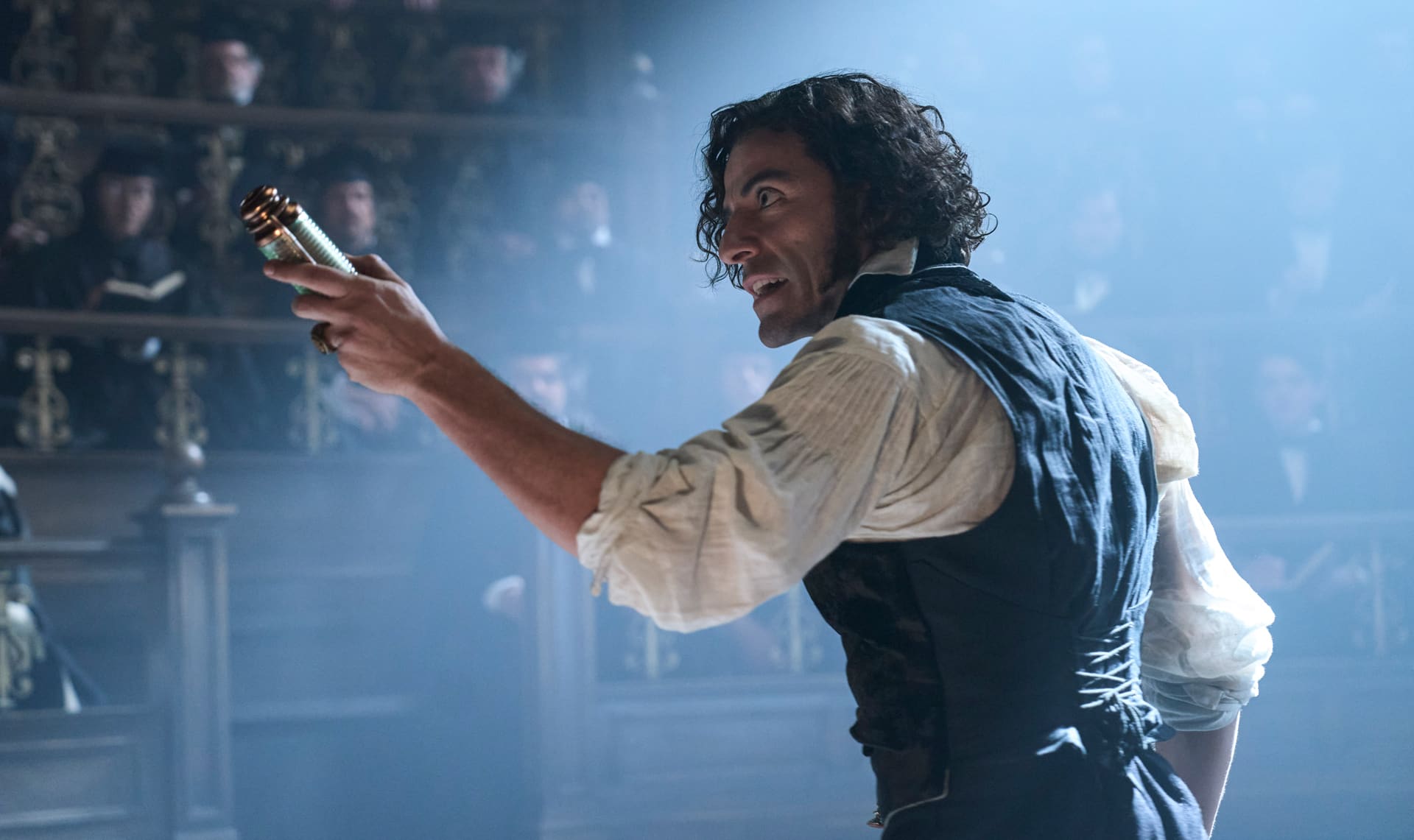
Needless to say, this is not a popular notion and Victor is brought before a disciplinary tribunal, where he manages to piss off/scare the shite out of his superiors by causing a dead torso to move by means of an electrical current while ranting about the Eastern idea of qi energy.
The bigwigs (with literal big wigs) accuse Victor of performing a galvanic parlor trick, then of the far more serious charge of unholy obscenity against God. Declaring that God must be inept, Victor is officially booted from med school. Undeterred, he grabs his scientific papers and whistles his way down to the slaughterhouses to pick up a couple of pig hearts, forcing an Act Two.
Break into Two
Arms merchant Heinrich Harlander (Christoph Waltz) approaches Victor with an offer no self-respecting madman could refuse.
B Story
The B Story relationship between Victor and his brother’s fiancée Elizabeth (Mia Goth again and even weirder than her Claire portrayal, which is saying a lot) is kind of a snooze, so let’s talk about the B (is for Buddy Love) Story between Victor and the Creature; it crosses the A Story of Victor’s “God complex” arc, but in del Toro’s hands, becomes the heart and soul of the film.
In subtle, and frequently unsubtle ways, del Toro traces Victor’s rise, fall, and redemption through how he interacts with his “son,” the incomplete Hero only finding wholeness through this relationship.
Fun and Games
What could be more Fun & Games than being given unlimited funds and a big-ass castle to make a monster? In Victor’s antithesis world, he gets what he (thinks he) wants and del Toro gets a chance to play in the sandbox of body horror, one of his favorite pastimes.
Victor and Harlander examine men who are about to be hanged for their limb potentiality, experiment with batteries to see which strength will zap a corpse back to life, and steal bits and bobs from freshly dead soldiers on a battlefield.
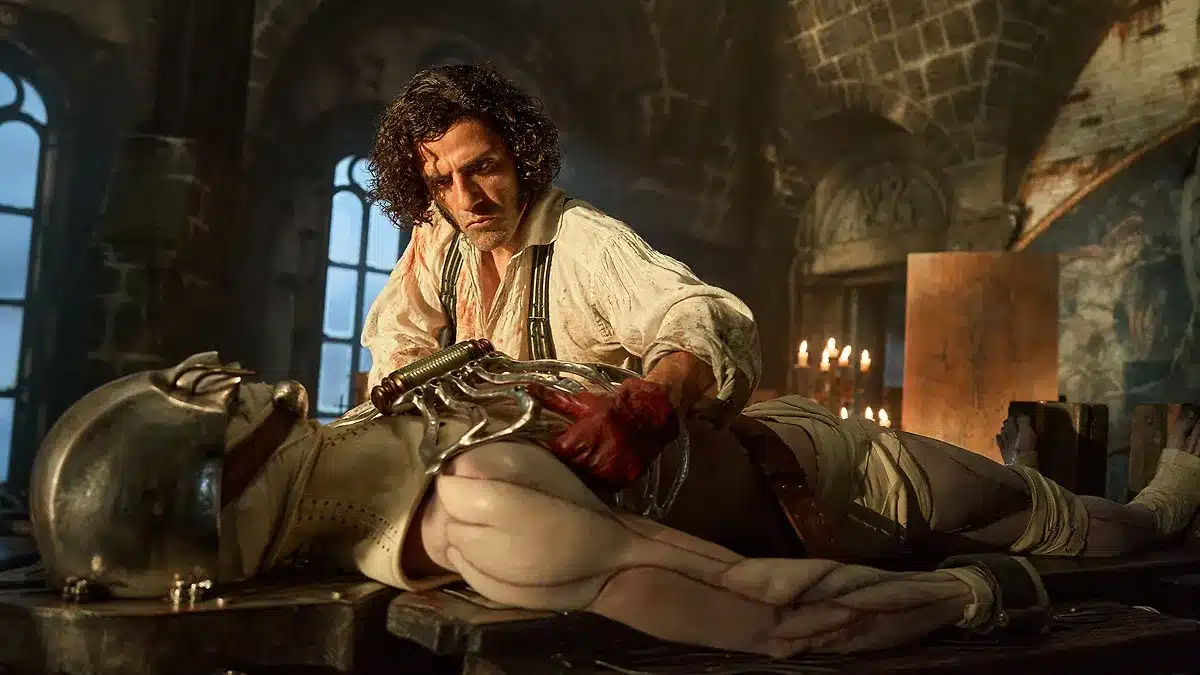
Although occasionally distracted from juicy-sounding eyeball insertions and raspy skin peelings by his obsession with William’s (Felix Kammerer) soon-to-be bride Elizabeth, Victor manages to stitch together quite a massive human just in time for a doozy of a thunderstorm.
There’s a bit of a snag as it turns out that Harlander has a condition for his continued financial support of this little project; he’s dying of syphilis and wants Victor to put his brain in the Creature’s body. Victor refuses, they argue, and Harlander conveniently falls to his death before he can taint Victor’s creation.
Once the Creature has come to life, Victor is in awe of his strength and ability to heal after being wounded, but soon grows frustrated when there’s not much headway in the head way; the Creature seems intellectually stunted, only able to speak one word: “Victor.”
Fatherhood proves to be just as thorny for Dr. Frankenstein as it had been for the Baron and Victor becomes every bit as cruel and abusive as his own father. Despite Elizabeth’s instant affection for the Creature, Victor decides to end his experiment, burning down the castle with his baby boy inside.
Midpoint
We cut back to the Horisont, where Victor’s tale is interrupted by an unwelcome visit from the Creature, who can now speak in full sentences and is going to damn well tell his side of the story. The stakes are raised and a ticking time clock starts, as we assume the Creature’s monologue will end with Victor’s—and the entire crew’s—violent deaths.
Bad Guys Close In
“The Creature’s Tale” begins with his escape from the inferno and subsequent dash through a forest, pursued by villagers in a “torches and pitchforks” sequence we would expect from any Frankenstein story worth its salt. He hides in the mill gears of a farmhouse and is befriended by the Blind Man (David Bradley), who teaches him to speak and read… and love.
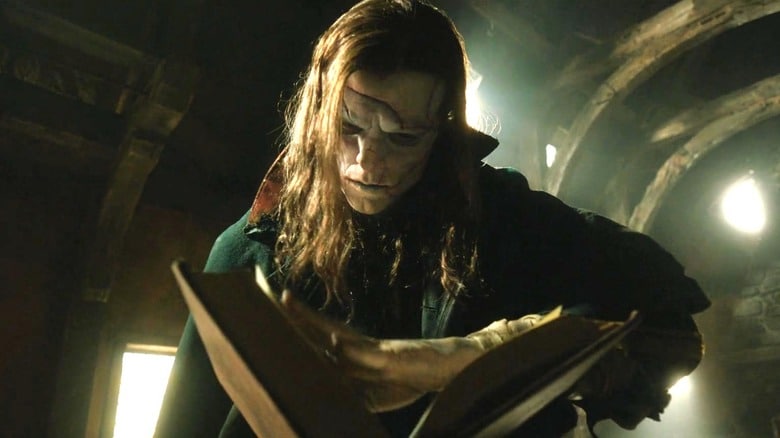
But this brief and genuinely sweet interlude ends with the appearance of internal bad guys—the Creature finds Victor’s papers, discovers the truth about himself, and despairs over being “… Nothing. A wretch. A blot.” Then the external bad guys show up—wolves. They kill the Blind Man and the Creature is blamed, of course; he is stabbed, shot, and left for dead.
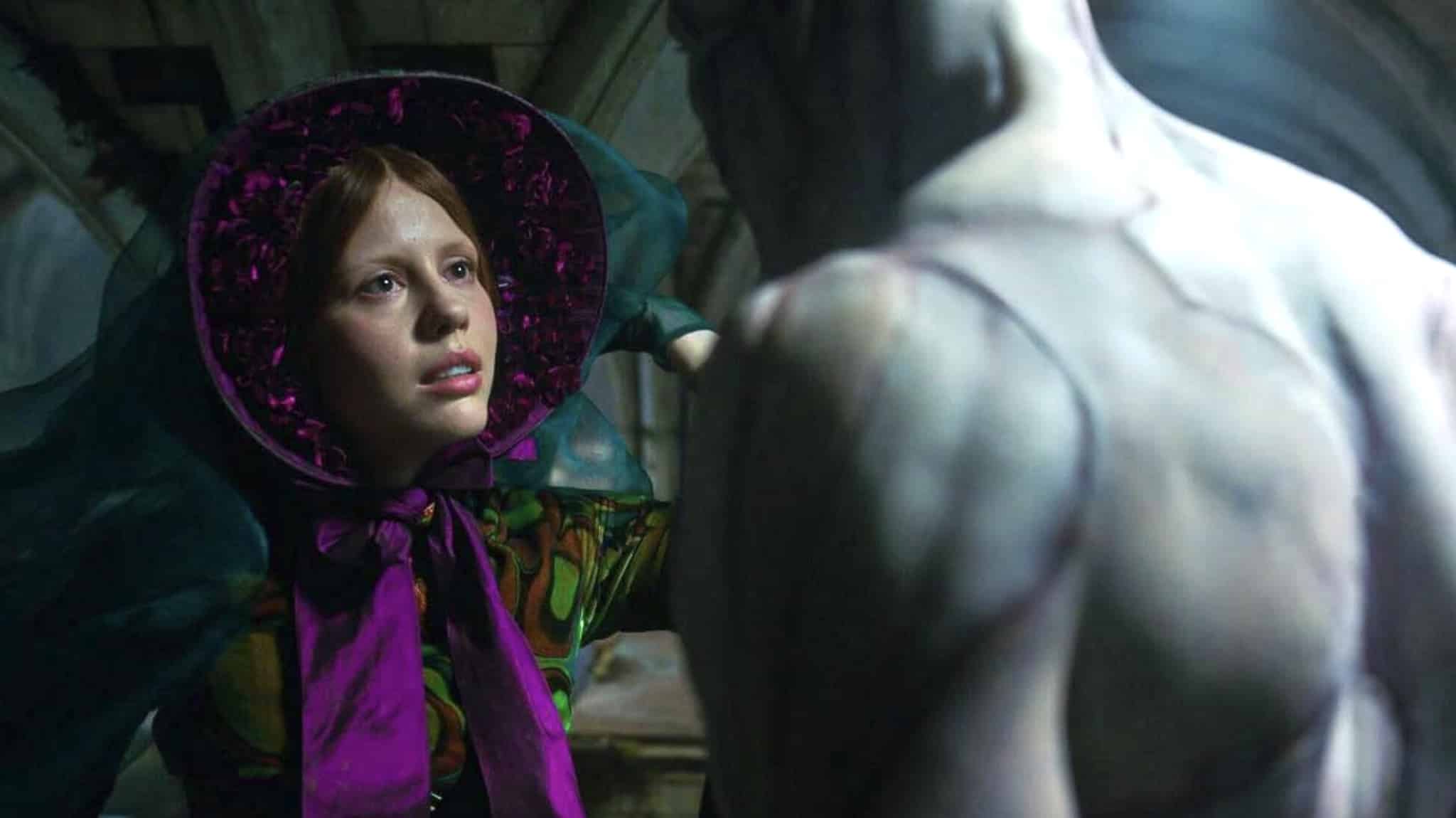
When the Creature revives and realizes he is incapable of dying, he seeks out Victor to ask for a companion, so he won’t live eternally alone. Unfortunately, he chose a rather inconvenient time for this request, as it’s William and Elizabeth’s wedding day and Victor reacts with disgust, imagining his unholy creation procreating and filling the earth with undead beasts. The Creature becomes enraged, attacking Victor, and Elizabeth tries to intervene.
All Is Lost
A double-bump All Is Lost for our two fellas as Victor accidentally shoots Elizabeth while trying to kill the Creature and William is mortally wounded in the ensuing melee.
Dark Night of the Soul
Victor sobs as he holds the dying William, who confesses that he’s always feared Victor, considering him the true “monster.” The Creature sobs as he holds the dying Elizabeth, who confesses her love for him.
Break into Three
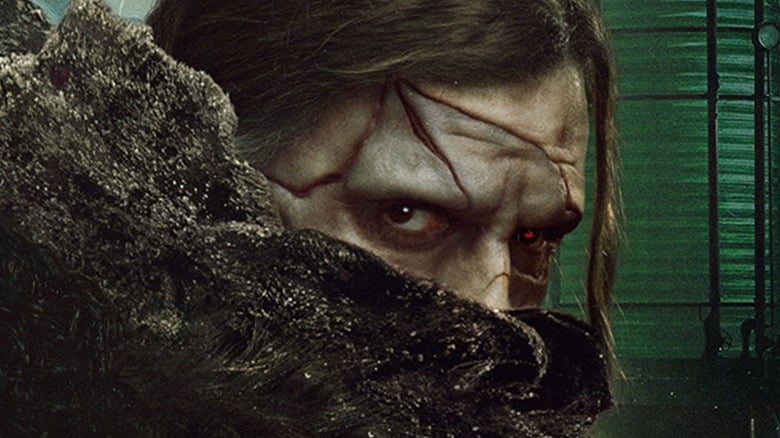
The Creature vows to make the rest of Victor’s life a living hell: “You may be my creator, but from this day forward, I will be your master.”
Finale
It’s the final showdown as Creator and Creature pursue each other through the frozen north. Victor gathers the team (eight furry dogs and a sled) and executes the plan, buying dynamite to hopefully blow his monstrosity back into all the various parts he had unwisely stitched together.
The TNT fails to destroy the Creature but Victor is critically wounded. He is rescued by the Danish sailors, the Creature follows to the ship, and we have come full circle.
After hearing the Creature’s story, Victor is consumed with regret and in a moving high tower surprise, he begs the Creature’s forgiveness and executes the new plan: calling him “son.” The filial synthesis is underscored as Victor recalls the hatred with which his own father addressed him and asks the Creature to say his name “like you did in the beginning, when it meant the world to you.” The Creature holds Victor as he dies, saying, “Rest now, Father. Perhaps now we can both be human.”
Captain Anderson is so moved by these events he allows the Creature to leave unharmed and the Creature uses his (super)human strength to break the Horisont from the ice.
Final Image
The Creature watches the sunrise, tears rolling down his scarred face, and none other than Lord Byron completes Guillermo del Toro’s opus: “And thus the heart will break, yet brokenly live on.” Quite the tender reversal of the common Monster in the House final image beat, the evil lives on…
Check out the Beat Sheet Analyses for these other Oscar®-nominated films: