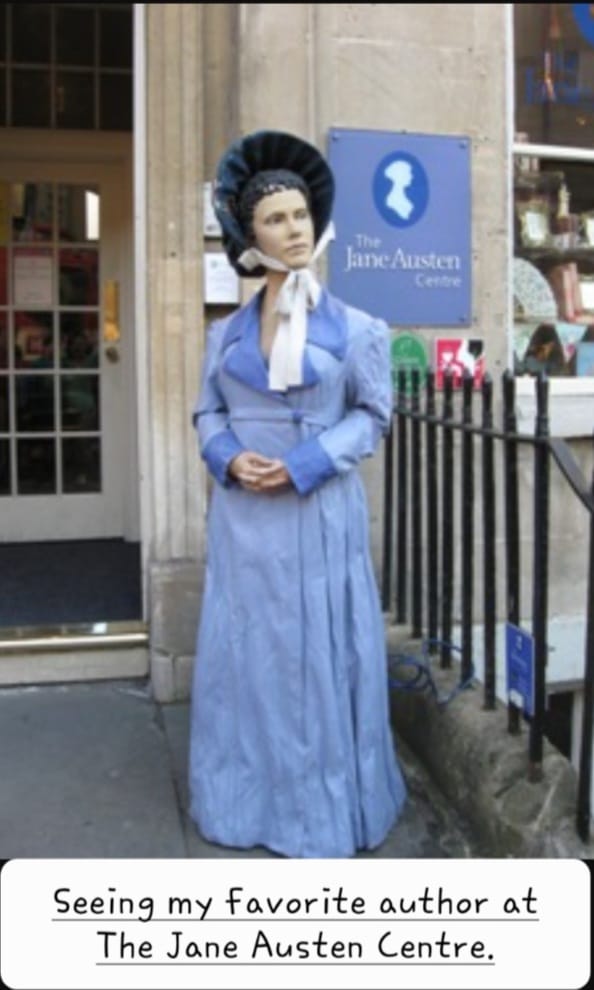


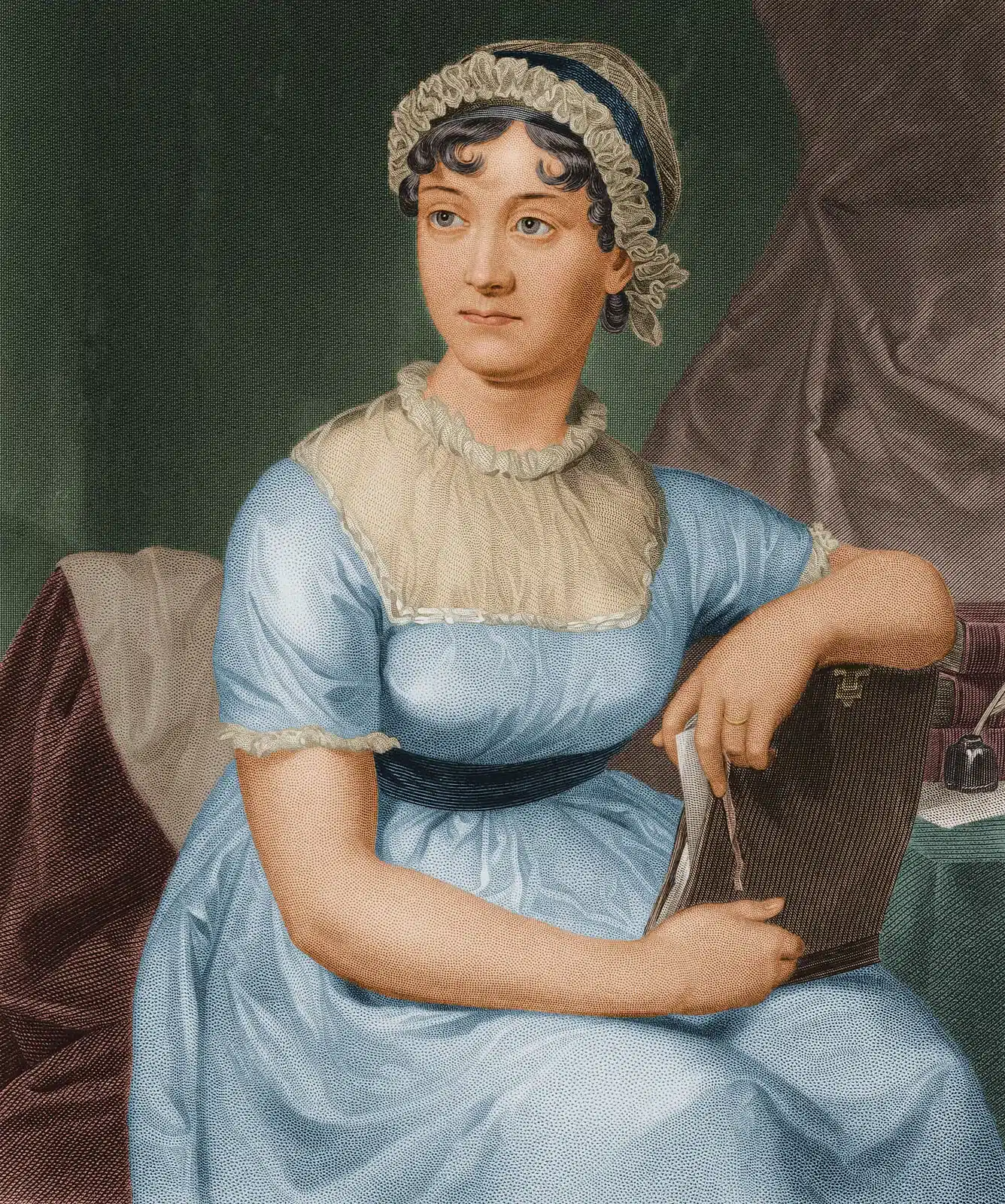
It’s a truth universally acknowledged that, in a world of literary impermanence and frequent indifference, most writers can only fantasize about having an impact that’s as sustained and respected as Jane Austen’s legacy.
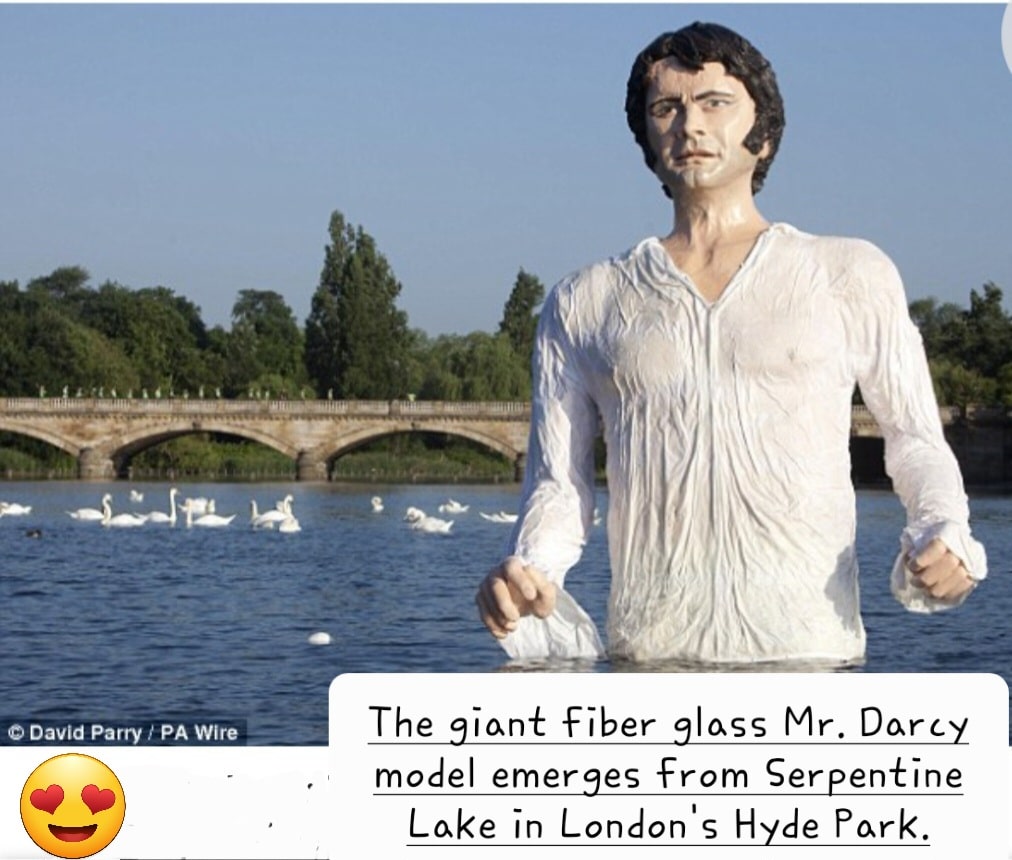
I mean, c’mon. She’s responsible for creating Mr. Darcy. Is that alone not worthy of an honorary statue in a lake somewhere?
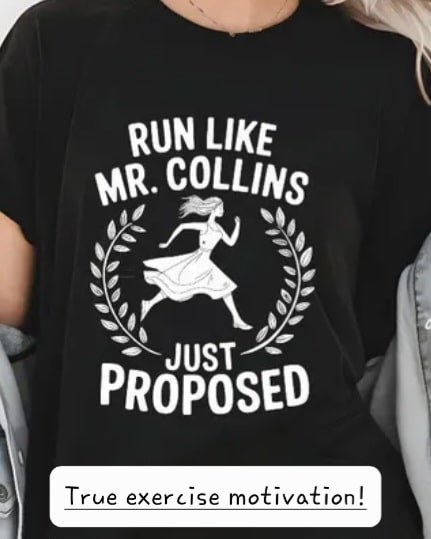
While only modestly famous and not paid nearly well enough during her lifetime, Jane managed, in the two centuries since her death, to captivate millions of readers with her books, inspire countless story variants and film adaptations, and spawn more clothing and accessories than nearly any other author that’s ever existed. (I know I’m not the only person out there who has a “Run Like Mr. Collins Just Proposed” T-shirt.) Sure, William Shakespeare may be the one exception when it comes to casualwear and swag, but it’s a close call.
Jane’s six completed novels have the kind of resonance with audiences that’s beyond enviable. Writers of romantic fiction, like me, should be writhing with envy and claiming to despise her. Not only is it highly unlikely that Colin Firth, JJ Feild, Jeremy Northam, or any other hot British actor will star in a movie made from one of our books, but it’s even less likely that our stories will encourage the doctoral scholarship, leading to innumerable academic articles and textbooks, that dear Jane’s writing—from her juvenilia to her posthumous releases—inspired over the last several decades.
But of course we don’t hate Jane Austen.
We revere her. We consider her a genius. A goddess of irony. A fairy godmother of witty romance who infused significant depth and social commentary just beneath the surface of her comedy of manners. We mourn the shortness of her life (a mere 41 years: 12/16/1775 – 7/18/1817) and lament the loss of every unwritten turn of phrase or spark of wisdom that she surely would have shared with us, had she only had more time.
Yet, how can we help but appreciate the brilliance of the works she did leave behind? How can we be anything other than supremely grateful for the masterpieces she gifted us in the form of Sense and Sensibility, Pride and Prejudice, Mansfield Park, Emma, Northanger Abbey, and Persuasion?
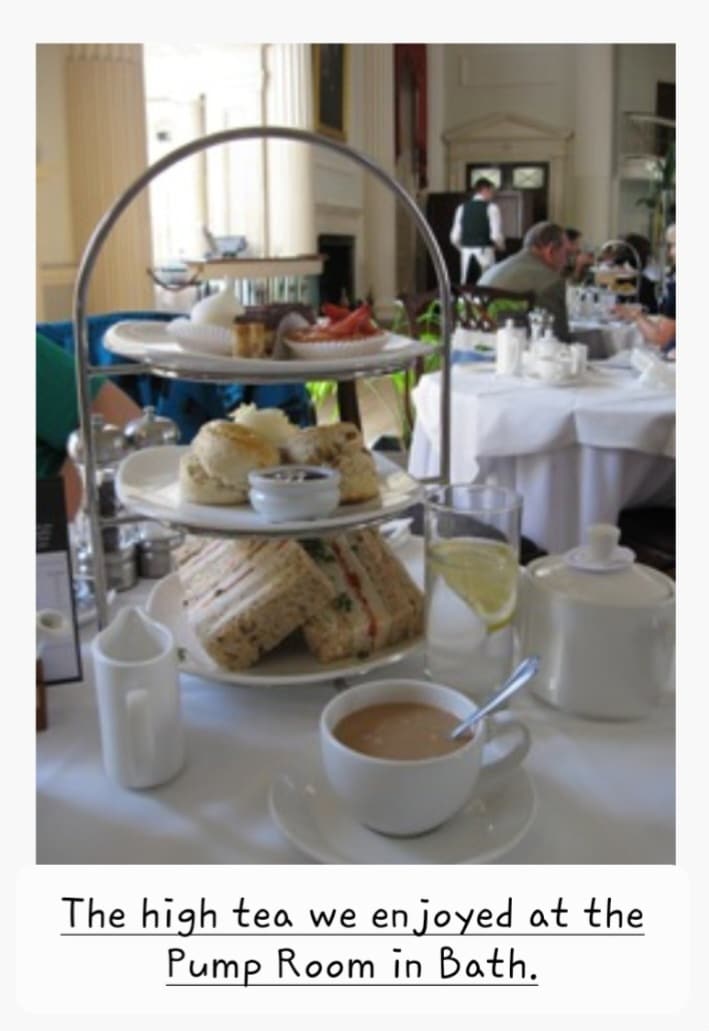
This month, it’s my great privilege to contribute a post here on Save the Cat! that adds to the global outpouring of admiration and celebration for “our” Jane on her 250th birthday. To proudly wear my faded “Pemberley” sweatshirt (all day on December 16th, certainly). And to virtually join fellow Jane Austen Society members and JA fans from around the world in raising a cup or two of tea in her honor.
The thing about Austen is that, for many of us who consider ourselves Janeites, our relationship with her is deeply personal.
I was a 14-year-old high school freshman when I was introduced to her most popular book, Pride and Prejudice. It was a standard English lit assignment, and though I was a ravenous bookworm, this novel was the first one I’d ever encountered where the author truly made me feel “seen.” I hadn’t read more than a chapter before I came to the stunning realization that, although Jane Austen and I had never crossed paths in real life, she knew me.
Furthermore, she appeared to know my family members, my classmates, and every type of boy I’d ever met. She didn’t call them, as I did, by their common 1980s-era names (i.e., Mike, Dave, Mark, Steve, etc.), but I recognized their behavior, attitudes, and dialogue in the form of Mr. Bingley, Mr. Darcy, Mr. Collins, and Mr. Wickham.
I mentally identified and labeled relatives and acquaintances who bore disturbing similarities to Lady Catherine, Caroline Bingley, or Mrs. Bennet. I desperately wanted to be more like Elizabeth, the story’s witty heroine, but I feared I played piano as poorly as her sister Mary and was as silly at times as the flirtatious Lydia.
Worse still, I realized if Elizabeth and Darcy, both of whom were unquestionably intelligent and principled, had missed important details because they were blinded by their own prejudices and pride, then perhaps my perspective was biased, too. What had I been missing in my own life? What uncomfortable realizations might I discover about myself if confronted by a smart adversary? And what else did the author know about human nature that I had yet to learn?
This is one of Jane’s greatest gifts to her readers—she’s an absolute master at showing character transformation.
As a result, she helps her audience recognize the necessity of questioning our own perceptions. When we analyze her novels, we can readily spot the power of Blake Snyder’s 6 Pillar Beats in showcasing how the protagonists change from the beginning to the end of the book. How the Catalyst introduces the main conflict, or how the Midpoint triggers the events that cause the bad guys (or snobbish ladies clad in Regency gowns) to close in.
[Note: The 6 Pillar Beats are the Opening Image, the Catalyst, Break into 2, the Midpoint, Break into 3, and the Final Image. For an excellent discussion of these beats and how they highlight character change, check out these two wonderful podcasts with Naomi Beaty & Don Roff: The First 3 Pillar Beats and The Last 3 Pillar Beats]
I’ve written full beat sheets for Pride and Prejudice and Persuasion on STC!, but in focusing specifically on how self knowledge can lead to the character changes we witness in several of Austen’s novels, it’s fun to compare/contrast the Opening and Final Images, along with some of the key turning points in between.
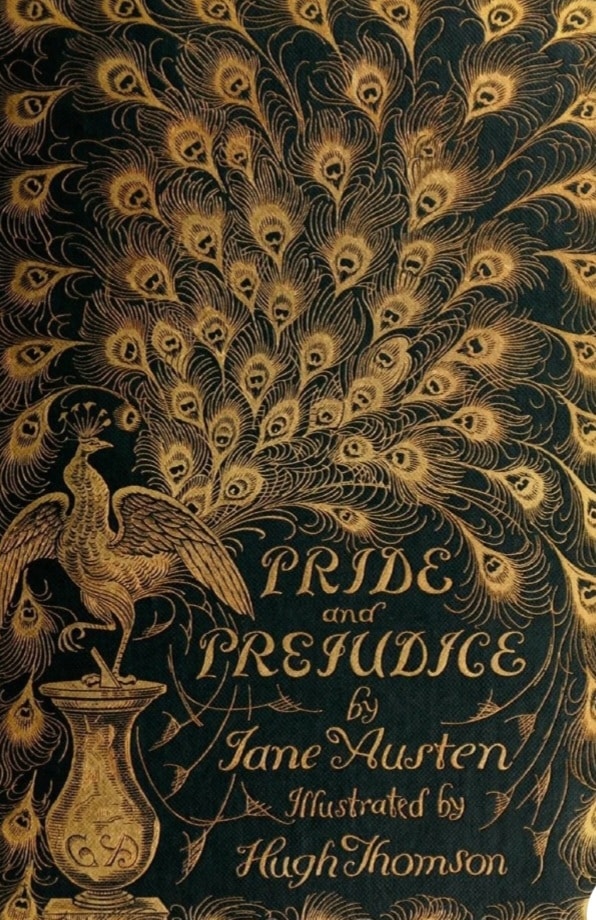
For instance, in Pride and Prejudice, Mrs. Bennet gleefully exclaims that a new and highly eligible bachelor has moved into the neighborhood. She’s practically planning a wedding between him and one of her daughters before the end of the first page. Elizabeth Bennet is amused but ultimately detached from this announcement. She’s not opposed to her big sister getting roped into potential matrimony, but she doesn’t believe herself to possess the sweet, accommodating nature of her elder sibling.
Elizabeth is clever, and she knows it. She doubts she can make a serious mistake in judgment… until she does. (Enter the Catalyst!) Her interactions with the new bachelor-neighbor’s best friend, Fitzwilliam Darcy, render her uncharacteristically furious with him and slightly irrational in her assessment of his character.
Darcy, likewise, considers his intellect and manners to be above reproach until he, too, is shown that even such a fine gentleman as himself can be mistaken on occasion. Both he and his best friend marry “the two most deserving” Bennet daughters at the very end, but not before both Darcy and Elizabeth have been humbled by their own errors. Not until each comes to the realization that they never fully knew themselves until they were forced to face each other and confront their individual weaknesses, misperceptions, and poor first impressions.
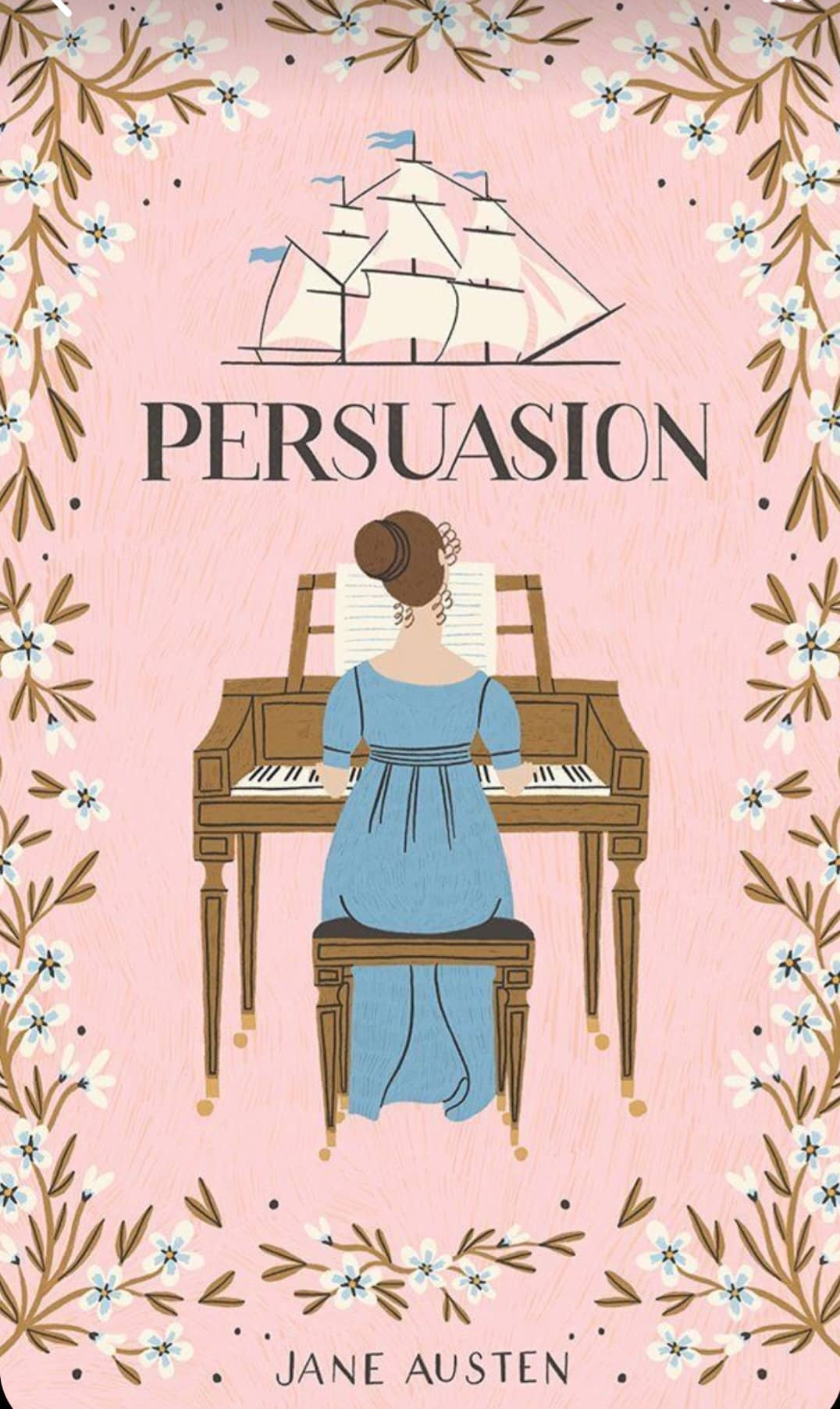
In Persuasion, sensible Anne Elliot is depicted as a foil to her vain father and her self-centered sisters. Her family starts the novel having to “retrench” to a smaller residence in Bath because of her father’s extravagant lifestyle since her mother’s death.
The husband and wife who rent their large country estate are the brother-in-law and sister of Frederick Wentworth, the suitor Anne had been in love with eight years earlier but had been persuaded not to marry. Wentworth is no longer a young man without means, though. He’s now back in town—a confident naval captain with a fortune, a desire to find a wife, and a huge, barely concealed grudge against Anne.
She’s well aware that she made a mistake in allowing herself to be misguided by her father and their family friend. Although her love for Wentworth has never wavered, she’s certain she long ago lost her chance with him. She wants only to regain his respect and, at the Midpoint, comforts herself with the belief that, at least, he takes her opinions seriously again.
By contrast, Wentworth struggles with his deeply suppressed feelings for Anne. He doesn’t want to want her, but he does. Those emotions build until they burst out of him in the form of a poignant and passionate letter where, at long last, he declares his love for her. Pen and paper does the trick, and the letter leads directly to Anne and Wentworth announcing their engagement in the final pages.
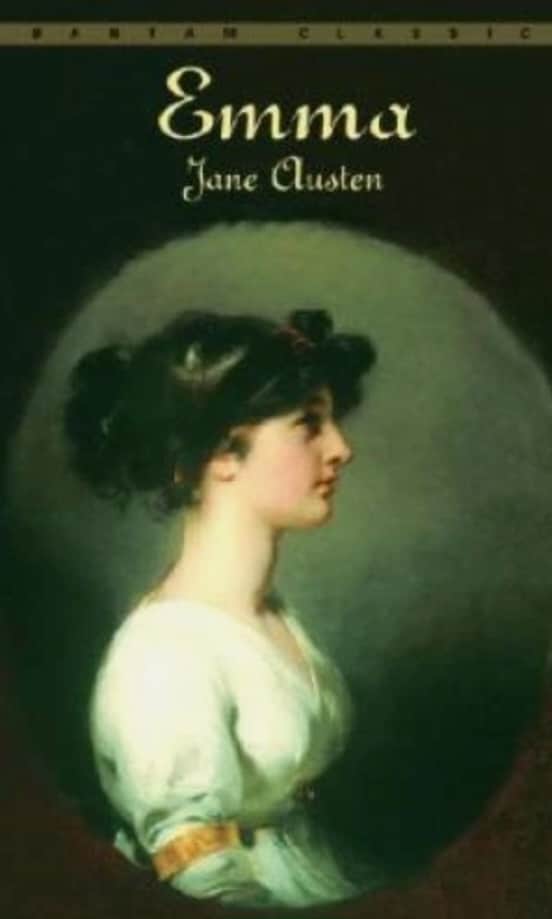
In Emma, the privileged and pretty Emma Woodhouse has convinced herself that she’s a natural matchmaker, and she sets out to do more of it. For her next “project,” Emma takes on the less educated, less experienced, and far less connected Harriet, urging the young woman to turn down a suitable marriage proposal from a kind farmer (a man Harriet happens to love) in favor of one of Emma’s yet-to-be-determined choices.
Harriet gives in to Emma’s strong personality, willingly letting herself have a Regency-style makeover, and allowing her well-meaning but overconfident BFF to find a gentleman for her that meets Emma’s high standards.
Emma, of course, has no interest in marriage for herself. Why would she need a man? She’s wealthy, popular, and relatively independent. No one, save her brother-in-law/nextdoor neighbor, George Knightley, even bothers to reprimand her when she meddles too much or behaves uncharitably.
Unfortunately, in her attempts to play matchmaker for Harriet, Emma finds herself drawing attention from other men, which, in a series of misunderstandings, leads to Harriet fancying herself as a potential match for Knightley—even believing Emma to be encouraging this. Nothing could have been further from the truth in either Emma’s or Knightley’s minds.
It isn’t until this awkward situation that Emma begins to recognize her longstanding friendship and deep love for her neighbor. She grows up and gets wiser before the reader’s eyes, corrects her errors just in time, and with a Shakespearean-like Final Image, the right pairs (Emma and Knightley, Harriet and the kind farmer, and another couple who’d kept their relationship secret for most of the story) are all able to get married in the end.
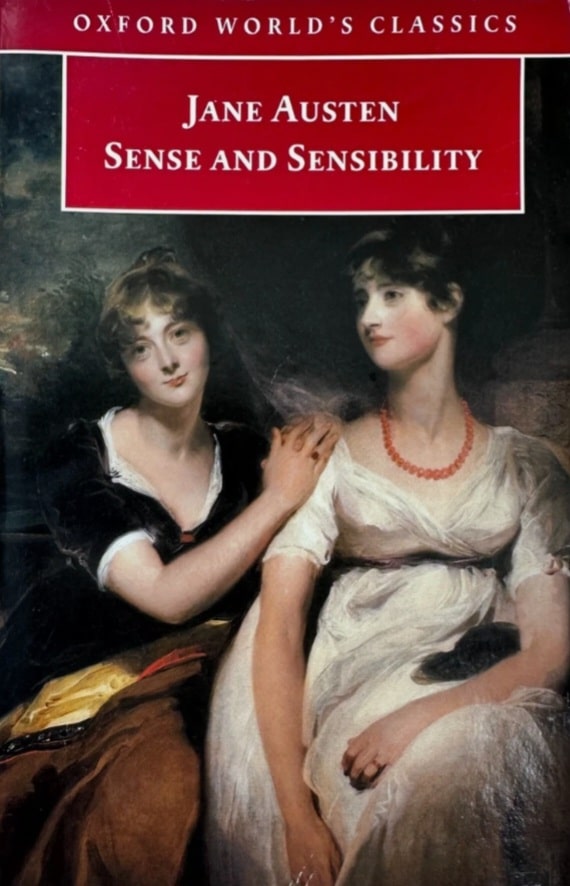
And finally, in Sense and Sensibility, when Elinor and Marianne Dashwood’s father dies, they, their mother, and their younger sister immediately lose their house, most of their possessions, and their prior level of income. They are left to rely on the “generosity” of their half-brother (the late Mr. Dashwood’s son from his first marriage) and his stingy wife.
Thankfully, they’re invited to move into a small cottage they can afford, but it’s a significant distance from their old home, and this separates Elinor from an attachment she’d begun to form with Edward Ferrars. There are complications to that relationship— disapproving relatives and a secret engagement between Edward and another woman—but these are eventually resolved in Elinor’s favor.
In this new locale, however, Marianne meets John Willoughby—the dashing, romantic hero of her dreams. Too bad he turns out to be a scoundrel. Willoughby abandons Marianne for an heiress who can bolster him financially. In one of the biggest demonstrations of emotional growth in the story, Marianne must come to terms with her evolving understanding of Willoughby’s true character and the weight she had previously placed on romantic love and excitement versus kindness, loyalty, and stability. The latter qualities she discovers in the older and decidedly more trustworthy Colonel Brandon.
Once Marianne has learned to temper her overly emotional tendencies (“sensibility”), and Elinor has recognized her need to be a tiny bit less practical (“sense”) in matters of love, both are able to find happiness with the men they’ve chosen.
For Sense and Sensibility fans of the Ang Lee film adaptation starring Emma Thompson as Elinor, Kate Winslet as Marianne, Hugh Grant as Edward, and the late/ever so wonderful Alan Rickman as Brandon, it was re-released in select theaters by Sony Pictures for a three-day run this month in honor of both Jane’s big birthday bash and the 30th anniversary of the movie. I remember seeing it with my husband when it first came out, a Friday date night selection that couldn’t have been more beautifully filmed, well-acted, and sigh-worthy. Perhaps you can stream it at home!
More recent cinematic offerings have also brought us the charming and quirky French rom-com Jane Austen Wrecked My Life, the intriguingly re-imagined Miss Austen miniseries, and the unusual if slightly anachronistic Netflix version of Persuasion with Dakota Johnson. (I’m still processing this one… and the white bunny that made an unexpected appearance.)
Many other Austen-inspired films, novels, stage plays, and even comic books abound in our current culture, alongside old favorites, like Bride & Prejudice, Austenland (the book and the movie), and Clueless. With themes so timeless and characters so universal, this doesn’t surprise me. I don’t think there will ever be an end to our desire to add fresh twists to Jane’s storylines and create new adaptations, both in the film world and in the literary one. To devour new stories that show how the protagonists transform dramatically from the starting scene to the end, like Elizabeth and Darcy did. Or Emma. Or Wentworth. Or sisters Marianne and Elinor.
Whether you’re a nerdy, decades-long fan like me, or newer to the JA party crowd, please take a moment this month to celebrate, in the company of all of the Janeites, the birthday of one of the world’s most beloved authors.
She’s responsible for having changed a myriad of lives with her astute, insightful writing—mine included. I hope her work has brought (or will bring!) entertainment, enlightenment, and joy to you as well.
How grateful we are for you, Jane Austen. Happy 250th!