

While it might be easy to think of an event that incites the story’s momentum, there’s a big difference between a strong Catalyst and a weak one.
In the Save the Cat! Greenlight Checklist, two important questions that are asked about the Catalyst are: Is something done to our hero? and Does it force our hero into action?
Those might seem simple to answer, but for the Catalyst to be the best it can be, it should not only answer those two questions in the affirmative, but it should also influence the Debate beat in such a way that the hero’s choice reveals much about who they are.
In my beat sheet and script consultations, I always make it a point to take some time to examine the Catalyst. Is it as strong as it could be? In order to help writers think through their Catalyst, I tell them that a good Catalyst will force their hero to choose between two equally undesirable options. By framing the Catalyst in this manner, it will also ensure that the next beat, the Debate, is stronger and will reveal insights into the hero and who they are.
The most obvious example of this is found in the 1999 film The Matrix. As Morpheus (Lawrence Fishburne) holds out his hands to Neo (Keanu Reeves), each holding a colored pill, he tells him, “You take the blue pill–the story ends, you wake up in your bed and believe whatever you want to believe. You take the red pill–you stay in Wonderland and I show you how deep the rabbit hole goes.”
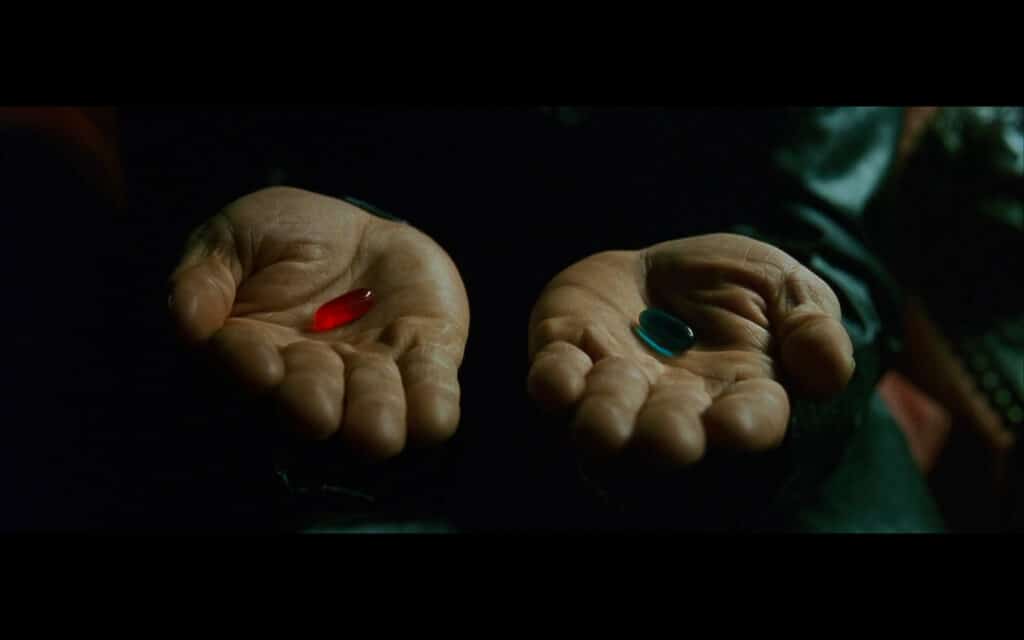
Two equally undesirable options. In the first instance, Neo can take the blue pill and wake back up in his comfortable life… although it really isn’t a “life” at all, but a simulation. Nothing is real. If Neo takes the red pill, he will discover the truth about the world around him… but it won’t be as comfortable as life is now. He’ll be at war with machines, artificial intelligence bent on dominating and destroying humankind.
Your Catalyst should be something done to your hero in such a way that it forces them to make a choice like that. Either way, there’s a good side and a bad side. No choice will be perfect. But one will be the choice needed to take them out of their comfort zone and enable them to confront their shard of glass and transform.
Let’s say your character suddenly discovers that they are adopted. They now need to sort through two choices in the Debate: they can go after their birth parents and learn who they are, though they might not like what they learn, or they can go about life as normal, but never truly know where they came from.
Or if you’re writing a Buddy Love story, the Catalyst is usually when the hero meets their counterpart and sparks fly. Rather than simply making the choice between going on a date or not going on a date, the choice should forever change their life in one way or another: they can throw themselves out there and face rejection but have the possibility of finding true love, or they can move on and maintain the status quo, but forever wonder if the individual was the “one that got away.”

In a Monster in the House story, the Catalyst usually happens when the hero makes a discovery that there is “something strange in the neighborhood”… and here is where we want to give them two choices, but neither feels right. Sure, they could go after the monster and discover what it is and where it came from… but they might be attacked, disemboweled, eaten, or killed. On the other hand, they can leave things alone… but they still might be attacked, disemboweled, eaten, or killed. It’s a no-win situation, but they must choose something.
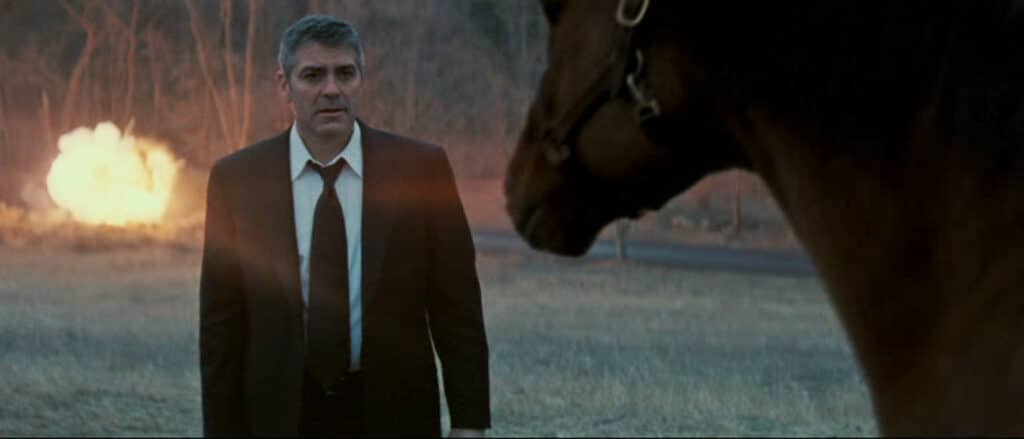
A Whydunit lends itself perfectly to creating a strong Catalyst. The hero, a detective of sorts, makes some sort of discovery during the Catalyst. Two choices stand before them: they can pursue it, untangling the web until they discover the heart of the secret, though it might force them to take a dark turn of their own… or they can let it go but never discover the secret, one which will plague them during their every waking moment.
The next time you watch a movie or read a book, ask yourself what two equally undesirable things the hero is being forced to choose between. Then, look at how they Debate those choices and what it tells the audience about the hero and their values.
Finally, apply this to your own stories. Take what might be a seemingly ordinary Catalyst and elevate it to something that the audience watches and thinks, “Wow… I’m glad that’s not me having to make that choice!”